
How to Plan Maternity and Newborn Photos Together: A NJ Timeline
Maternity portraits preserve the waiting: the shape of your belly, the anticipation, and the way your family looks just before someone new arrives. Newborn portraits preserve the beginning: tiny fingers, sleepy expressions, and the first photographs of your family in its new form.
Planning both together can make the experience easier. You can choose a visual direction, decide who will participate, prepare clothing before the busiest weeks, and reserve the newborn session while your due date is still a planning point.
If you are considering maternity photography in New Jersey and want newborn portraits after your baby arrives, this timeline will help you coordinate both without expecting pregnancy or a newborn to follow a perfect schedule.
Start the Conversation During Pregnancy
The simplest time to plan both sessions is before the baby arrives.
You do not need to know the exact birth date. Your due date gives us a flexible place to begin.
When you first reach out, share:
your estimated due date;
how many weeks pregnant you are;
whether you prefer studio or outdoor maternity portraits;
who you hope to include in each session;
the general style or colors you love; and
any fixed deadlines, such as a shower, announcement, or gift date.
Review the current collections at this stage. Family participation, image count, session length, wardrobe, and other details can differ, so confirm the right options before building your plan.
Plan the Maternity Session First
My current maternity guidance recommends photographing most pregnancies around 28–34 weeks. At that stage, the belly usually has a beautiful shape while many mothers still feel comfortable enough for posing and, when appropriate, walking at an outdoor location.
That range is a guide, not a rule. Your comfort, health, schedule, and guidance from your healthcare professional matter more than a number on a calendar. The plan may need to change.
Booking before that window gives us time to discuss the setting, clothing, family groupings, and backup plan.
Choose Studio or Outdoor With the Season in Mind
A maternity session can be created in my West Windsor studio or at an appropriate outdoor location. The best choice depends on the look you love and the experience that will feel most comfortable.
Studio portraits offer privacy, controlled lighting, consistent temperature, and an easy place to change looks. They are especially practical when the weather is cold, wet, windy, or unpredictable.
Outdoor portraits offer natural light, movement, and seasonal scenery. They also require more flexibility. We need to think about temperature, sunset time, walking distance, changing options, wind, rain, and the condition of the ground.
In late fall, I recommend having a clear weather plan rather than becoming attached to one exact outdoor picture. A beautiful session should not depend on standing outside when you are uncomfortable.
Connect the Two Galleries Without Making Them Match
Maternity and newborn photographs can feel connected without using identical colors, clothing, or props.
The maternity chapter may feel elegant and expressive, while the newborn chapter feels soft and intimate. A few repeated choices can help them belong together:
a shared neutral or muted color palette;
similar warm or cool tones;
one meaningful family grouping in each session;
a consistent preference for simple or more detailed styling; or
one personal item discussed and approved before both sessions.
Do not force a theme across both sessions. The strongest connection is your family, not a prop.
Choose Maternity Clothing Before Newborn Clothing
Begin with the expecting mother’s maternity look. It is much easier to coordinate a partner or children around one main gown than to choose everyone’s clothing separately.
My studio currently provides maternity wardrobe options, and I help compare color, fit, coverage, texture, and mood. The maternity-gown guide explains fitted, flowing, ruffled, robe, bodysuit, and fabric styles.
For newborn family portraits, you can carry one or two of the same quiet tones forward. Cream, beige, soft gray, white, muted earth tones, or another coordinated palette can keep attention on faces and connection.
You do not need to purchase a special newborn photography outfit for the baby. My West Windsor studio has wraps, outfits, and photography accessories available. Confirm what is included in your selected newborn collection, then plan parent and sibling clothing around the final direction.
Decide Who Will Be Included in Each Session
Some mothers want maternity portraits focused mostly on themselves. Others want their partner and children included throughout. Many families prefer a combination.
Newborn sessions can also include different groupings depending on the collection: baby alone, parents with baby, siblings, or the whole family.
Write down the combinations that matter most before booking. For example:
mother alone during maternity portraits;
both parents together;
each older child with the expecting mother;
the entire family before baby arrives;
baby alone during the newborn session;
each parent with the baby;
siblings with the baby; and
the new family together.
That list helps you choose the appropriate session options and keeps a meaningful grouping from becoming an afterthought.
If older children will participate, my family maternity planning guide explains how to prepare them without pressure.
Reserve the Newborn Session Before Delivery
My current newborn photography information recommends reserving during pregnancy. The due date is used as a planning point; the actual appointment can be adjusted after the baby arrives.
The studio currently describes the early newborn stage—often around 7–14 days—as the usual session window. That is not a promise that every baby must be photographed on one exact day. Early arrivals, late arrivals, feeding needs, recovery, medical care, and family circumstances can all affect timing.
Booking during pregnancy means the major decisions are already made. You know whom to contact and what information to share after delivery.
Prepare the Practical Details Before Baby Arrives
During the final weeks of pregnancy, keep the newborn preparation simple.
Set aside coordinating clothing for parents and siblings. Check that children’s clothes and shoes still fit. Pack the usual baby supplies when the session approaches; you do not need to bring your entire nursery.
Before delivery, confirm:
how you will notify me after the baby arrives;
which family members are included;
what the studio provides;
what you should bring for feeding and diapering;
whether a sentimental item is being considered;
how the proofing and image-selection process works; and
any current preparation instructions for your selected collection.
Discuss any meaningful object before the session so I can consider whether it can be incorporated safely and visually.
Let the Newborn Session Follow the Baby
The maternity session can be planned around a fairly predictable appointment. The newborn session needs more flexibility.
Newborns eat, cry, stretch, wake, settle, and need diaper changes. Those moments are part of a baby-led session.
If your baby needs to feed, we pause. If your baby is awake, I adjust. If a pose is not comfortable, we move on. A calm experience is not created by making a newborn follow the clock; it is created by allowing enough time to respond.
I guide hand placement, angles, and family groupings while keeping the baby’s comfort at the center.
A Simple Maternity-to-Newborn Timeline
Here is the planning sequence I recommend:
Early or Middle Pregnancy
Explore maternity and newborn photography styles.
Share your due date and the people you want included.
Review current collections and reserve the appropriate sessions.
Before the Maternity Window
Choose studio or outdoor maternity photographs.
Discuss weather backup plans for outdoor sessions.
Select the maternity wardrobe direction.
Coordinate partner and sibling clothing.
Around the Current 28–34-Week Maternity Window
Complete the maternity session at the time that is comfortable and appropriate for you.
Keep the experience flexible if your needs change.
Before Delivery
Set aside newborn family clothing.
Confirm how to send the birth update.
Review the newborn preparation information.
Discuss sentimental items before bringing them.
After Baby Arrives
Send the birth date and any scheduling information requested.
Adjust the appointment if the baby arrived earlier or later than expected.
Pack the normal feeding and diapering supplies your baby uses.
Arrive knowing the session will move at your baby’s pace.
Frequently Asked Questions
Do I have to book maternity and newborn photos as one package?
No. The important step is comparing the current session and collection options so you understand what is included and what fits your family. Planning the sessions together can still help the timing and styling feel connected even when they are reserved separately.
When should I contact you about both sessions?
Begin during pregnancy. Your due date gives us a planning point, and contacting me before the maternity window leaves more time for wardrobe, location, family participation, and newborn preparation.
What if my baby arrives early or late?
The actual newborn appointment can be adjusted around the baby’s arrival. Share the update requested in your booking instructions, and we can determine the appropriate next step.
Should the maternity and newborn photos use the same colors?
They can share a palette, but they do not need to match. Repeating one or two quiet tones can connect the galleries while allowing each session to have its own feeling.
Can my partner and older children join both sessions?
Participation depends on the current collection selected. Tell me every person and grouping you want before booking so we can confirm the right option and prepare clothing for everyone.
What if I do not feel ready for photographs after delivery?
Tell me what is happening rather than worrying silently. Recovery and family circumstances are personal. We will work from the current booking terms and available options, without expecting every parent or baby to follow an identical timeline.
Plan the Story Before the Newborn Days Begin
Maternity and newborn photographs preserve two chapters that pass quickly: waiting for your baby and finally holding your baby.
Planning them together gives us time to coordinate the style, prepare clothing, confirm the right collections, and reserve the newborn session without pretending we can predict an exact birth date.
If you are expecting and live in West Windsor, Princeton, Mercer County, or a surrounding Central New Jersey community, explore my current maternity and newborn information, then contact me with your due date, how many weeks pregnant you are, and the people you hope to include.
I will help you plan the next step calmly.
— Svetlana
Tiny Moments by Svetlana / Svetlana Boyko Photography
What to Wear for Bar/Bat Mitzvah Family Photos: A Calm NJ Style Guide
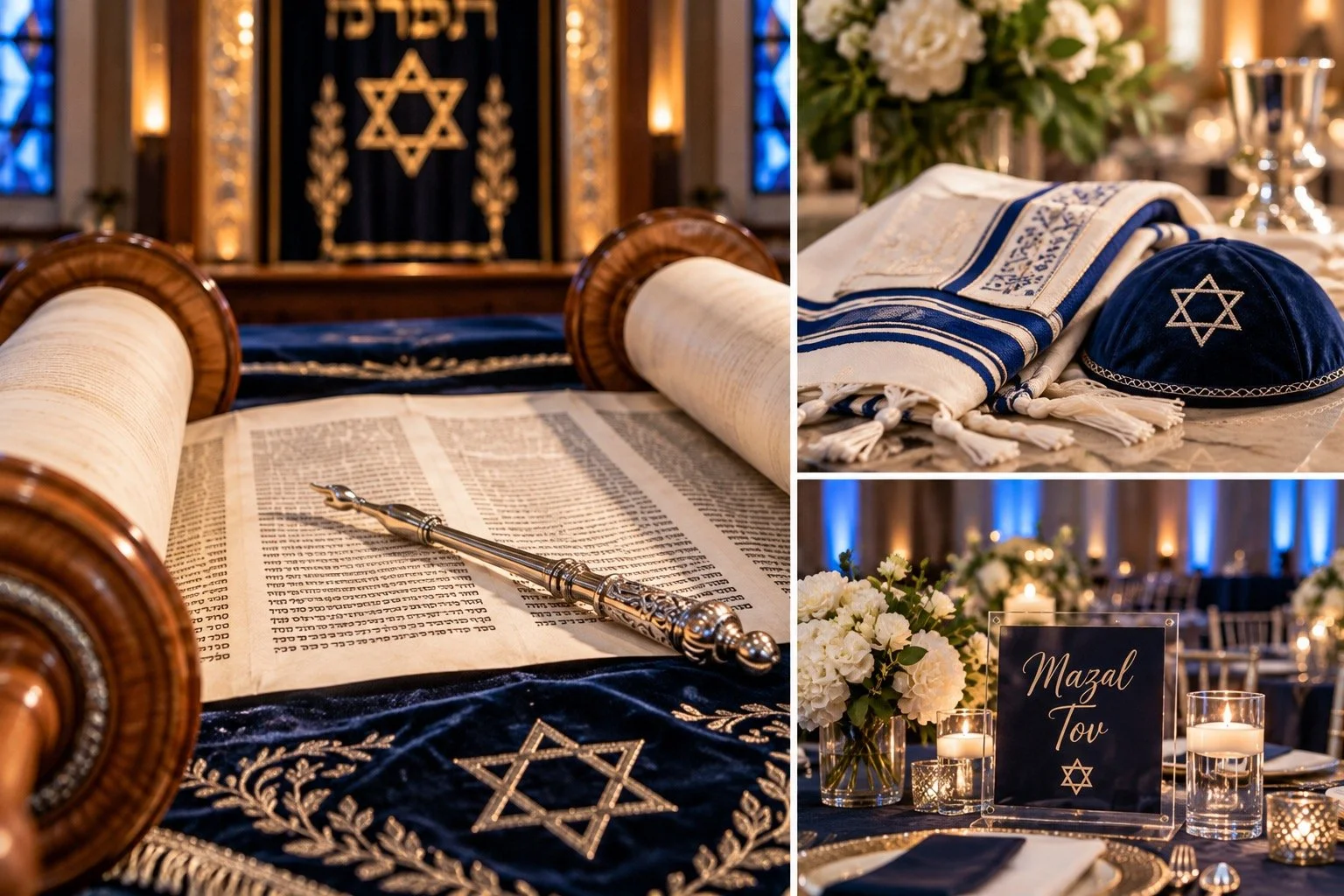
Planning clothing for a Bar or Bat Mitzvah can feel more complicated than dressing for an ordinary family portrait. The child should feel special and recognizable. Parents, siblings, and grandparents need to coordinate without looking identical, while the congregation may have expectations for sanctuary clothing, head coverings, or photography times.
The goal is not to make every person wear the same color. It is to create a family that looks connected while respecting the setting and allowing each person to feel comfortable.
If you are planning Bar or Bat Mitzvah photography in Princeton or Mercer County, here is how I recommend choosing clothing that photographs beautifully and still feels true to your family.
Begin With the Congregation’s Dress and Photography Rules
Before choosing a dress, suit, shoes, or color palette, ask the synagogue or temple what is expected in the spaces where photographs may be created.
Policies vary. One congregation may permit sanctuary portraits on a weekday; another may allow photographs before or after the service. Clothing and head-covering expectations can also differ.
For example, The Jewish Center Princeton’s current B’nai Mitzvah handbook says sanctuary photography is not permitted during Shabbat, and many families arrange portraits during the preceding week. Its guest guidance also addresses worship-appropriate clothing and head coverings.
That is one local example, not a rule for every congregation. Confirm the current policy directly with your own clergy or event contact before finalizing clothing or portrait timing.
Start With the Bar or Bat Mitzvah Child
The child is the center of the photographs, so begin with their clothing before coordinating everyone else.
Consider three things:
what the congregation requires or recommends;
what the child needs for the service or approved portraits; and
what helps the child feel confident and comfortable.
A well-fitted outfit should still allow the child to sit, stand, walk, and move naturally. Check sleeves, hems, waistbands, collars, shoes, and layers that may shift.
If the child will wear a tallit, kippah, head covering, jewelry, or another meaningful item, ask the congregation how and when it should be worn. Sacred or ceremonial items are not styling props; I photograph them within the plan approved by your family and congregation.
The child does not need to look like someone else. A polished portrait can still show their personality.
Coordinate the Parents Around the Child
Once the child’s clothing is selected, use it as the visual anchor for the immediate family.
If the child wears navy, gray, black, cream, or another classic neutral, parents can choose complementary shades rather than repeating the exact color. If the child’s outfit contains a distinctive accent, one parent may echo that color in a tie, scarf, blouse, jewelry, or subtle detail.
Avoid having both parents introduce strong colors that compete with the child. The eye should naturally return to the person celebrating the milestone.
Lay the complete family wardrobe together or take a quick phone photograph. It is easier to notice imbalance before the event than when everyone is already dressed.
Give Siblings a Connected but Individual Look
Siblings should look like part of the same family without appearing to wear a uniform.
Choose clothing within the shared palette, then allow some individuality through texture, shape, or a soft accent. One sibling might wear a solid dress, another a shirt with a jacket, and another a simple knit or blouse that connects to the same tones.
Avoid large logos, neon colors, athletic graphics, or several bold patterns. These details can pull attention away from faces.
Ask older siblings for limited input. Giving them two appropriate choices can reduce resistance while keeping the overall look coordinated.
For younger children, comfort matters more than an elaborate outfit. Avoid stiff fabric, unstable shoes, or accessories needing constant adjustment.
Include Grandparents in the Wardrobe Plan
Grandparents are often part of the most meaningful family combinations, yet they are sometimes told only to “wear something nice.” A little more guidance helps them feel included and prevents an unexpected color or pattern from dominating the portrait.
Send grandparents the palette and a photograph of the immediate family’s clothing. Ask them to coordinate rather than copy the child.
Comfort and mobility deserve special attention. Shoes should feel secure, and clothing should allow walking, standing, or sitting without frequent fixing.
If a grandparent uses a mobility aid, do not treat it as something that automatically needs to be hidden. Tell me in advance so we can plan respectful, comfortable groupings.
Choose a Small, Flexible Color Palette
A useful palette usually includes two or three main neutrals and one or two accents.
Possible combinations include:
navy, soft gray, cream, and muted blue;
black, charcoal, ivory, and a jewel-tone accent;
taupe, deep green, cream, and warm brown;
burgundy, navy, soft beige, and gold details; or
dusty blue, medium gray, white, and a darker blue accent.
These are examples, not rules. The right colors depend on the child’s clothing, season, congregation, reception design, and your family’s style.
White can photograph beautifully, but several very pale outfits may create a bright area that competes with the child. Balance light colors with medium or darker tones.
Use Patterns and Texture Carefully
Patterns are not forbidden. They simply need room to breathe.
One subtle pattern can add interest when others wear mostly solids. Several plaids, florals, stripes, and bold prints together can feel busy.
Texture often photographs more quietly than pattern. A refined knit, velvet jacket, lace detail, or silk blouse can add depth without pulling attention from faces.
Watch for fabrics that wrinkle quickly or reflect strong light. If an outfit looks different under indoor lighting, photograph it near a window and under a lamp before making the final decision.
Decide Whether Anyone Will Change for the Party
Some families use the same clothing for portraits and the celebration. Others plan worship-appropriate clothing for approved synagogue portraits and a second look for the reception.
Either approach can work. A change should have a purpose rather than add another task.
Before planning a second outfit, ask:
Is there enough private time and space to change?
Will the photography timeline include both looks?
Does the second outfit allow the child to dance and move comfortably?
Who will keep track of shoes, accessories, and garment bags?
Will changing delay family portraits, introductions, or guest time?
When possible, photograph formal family combinations before changing. Party clothing can then support relaxed portraits and candid reception images.
Think About the Venue and Décor Without Matching Them
Family clothing need not duplicate the reception colors; it should simply avoid fighting with them. If the room has dramatic blue lighting, an entirely blue wardrobe may blend in. If décor is colorful, a calmer family palette may photograph better.
Share photographs or a design board with me when available. I can consider the backdrop, room lighting, and portrait locations while helping you evaluate clothing choices.
The current event-photography experience includes a combination of guided portraits, candid moments, and celebration details. Clothing should support all three—not only the formal family lineup.
Prepare the Clothing Before Event Week
Try on complete outfits several weeks before the celebration, including shoes, underlayers, belts, jewelry, and head coverings where applicable. Children grow, tailoring takes time, and online colors may look different beside the other outfits.
During event week:
steam or press clothing;
remove tags and temporary stitching;
clean shoes and eyeglasses;
pack a lint roller and small stain-removal item;
place jewelry and accessories in labeled containers;
bring comfortable backup shoes if appropriate; and
keep any second outfit together in one garment bag.
Assign one adult to check the wardrobe details. The child should not be responsible for remembering every accessory while preparing for such an important day.
Keep the Portraits About the Family
Clothing matters because it supports the photograph, not because it is more important than the people wearing it. A coordinated palette guides attention toward the child and family, while comfort helps people stand close and look natural.
You do not need a family of professional models. I guide posture, hands, spacing, and expressions so everyone knows what to do.
Bar/Bat Mitzvah Family Portraits in Princeton and Mercer County
I photograph Bar and Bat Mitzvah celebrations throughout Princeton, West Windsor, Mercer County, and surrounding Central New Jersey communities.
Local venues and congregations have different portrait locations, access rules, lighting, and dress expectations. Share the congregation, venue, portrait time, family size, and clothing ideas so I can plan respectfully.
If you also want a broader family portrait outside the event, explore my family photography options. The Mitzvah-day plan should remain focused on the milestone and the people who are part of it.
Frequently Asked Questions About Mitzvah Family Photo Outfits
Does everyone need to wear the same color?
No. Choose a small shared palette and coordinate instead of matching exactly. The child should remain the visual center while each family member still looks like themselves.
What should parents wear for Bar or Bat Mitzvah portraits?
Begin with the child’s outfit and congregation requirements. Parents can choose complementary neutrals or repeat a subtle accent without competing with the child.
Can family members wear patterns?
Yes, but use them selectively. One subtle pattern can add interest; several strong patterns in one group can distract from faces and relationships.
Should the child change clothes for the reception?
A change is optional. Consider the schedule, changing space, comfort, and whether both outfits will actually be photographed before adding it to the day.
What should grandparents wear?
Send grandparents the family palette and ask them to choose a comfortable coordinating color. Consider secure shoes, mobility, seating, and clothing that does not require frequent adjustment.
Do synagogue dress rules apply to portrait sessions?
They may. Rules vary by congregation and can depend on the location and timing of the portraits. Confirm directly with your clergy or venue contact before choosing clothing.
Ready to Plan the Complete Portrait Look?
Begin with the congregation’s requirements and the child’s clothing. Then coordinate parents, siblings, and grandparents around a small palette that feels comfortable, respectful, and true to your family.
If you are planning a Bar or Bat Mitzvah in Princeton, West Windsor, Mercer County, or nearby Central New Jersey, review my Bar/Bat Mitzvah photography information and contact me with your date, congregation, reception venue, family size, and any clothing ideas you are considering.
I will help you think through how the portrait plan and wardrobe can work together.
— Svetlana
Tiny Moments by Svetlana / Svetlana Boyko Photography
What to Wear for Christmas Family Photos in NJ: 2026 Holiday Outfit Guide
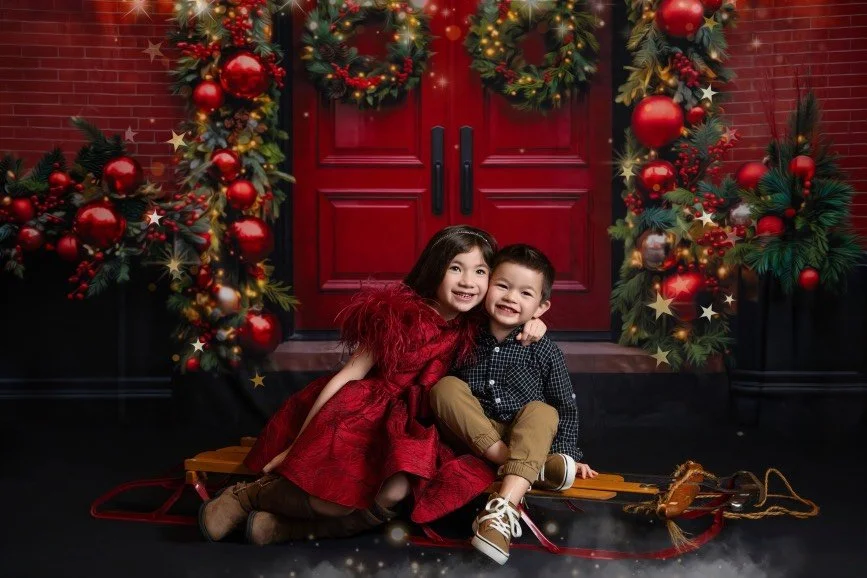
A brother and sister smiling together on a vintage wooden sled in front of an elegant red Christmas door. The festive holiday scene features lush evergreen garlands, wreaths, red and gold ornaments, berries, warm twinkle lights, and sparkling details. The girl wears a beautiful red holiday dress while her younger brother wears a black patterned shirt and tan pants, creating a warm and joyful Christmas portrait.
The holiday season is one of my favorite times of the year at Tiny Moments by Svetlana Photography. Every year, families come to my West Windsor studio for Christmas portraits, holiday cards, Baby’s First Christmas photos, sibling pictures, and updated family portraits.
And almost every family asks me the same question before their session:
“What should we wear for our Christmas pictures?”
The good news is that your family does not need to wear identical outfits to look coordinated. In fact, photographs usually look more polished when everyone coordinates while still wearing something that fits their own personality.
If you are already planning your session, you can view my 2026 Holiday Photography Sessions in West Windsor, NJ for current holiday session information.
Red, Cream & Gold: A Classic Christmas Combination
You really cannot go wrong with red during the holidays.
Instead of dressing the entire family in bright red, use it as an accent color. For example, your daughter might wear a beautiful red dress while Mom chooses cream or champagne and Dad and the boys wear neutral tones.
Beautiful combinations include:
Red + cream + gold
Burgundy + champagne + ivory
Red + beige + warm brown
Red + black + gold
Gold accessories, subtle sparkle, velvet textures, bows, and holiday shoes can finish the look beautifully without making the outfits feel too busy.
Deep Green & Gold for an Elegant Holiday Look
Deep emerald and forest green photograph beautifully during Christmas sessions.
Green is especially gorgeous for dresses and can be paired with cream, beige, black, champagne, or gold.
For example, Mom could wear black or champagne while the girls wear emerald dresses. Dad and boys could wear cream, black, tan, or another neutral.
This creates a coordinated family portrait without everyone looking like they are wearing the same outfit.
Cream & Neutral Colors for Timeless Christmas Pictures
Not every Christmas portrait needs bright holiday colors.
Cream, ivory, beige, champagne, camel, and soft brown can create an incredibly elegant and timeless holiday portrait.
Neutral outfits are also a great choice if you want to display your photographs in your home throughout the year rather than only during Christmas.
Add just a little holiday color through accessories, children's clothing, or the Christmas decorations around you.
Burgundy for a Rich Holiday Look
Burgundy is another beautiful alternative to traditional bright Christmas red.
It pairs especially well with:
Cream, champagne, gold, black, beige and deep green.
Burgundy velvet dresses can look gorgeous for girls, while adults can incorporate the color through sweaters, dresses, ties, or accessories.
The deeper tone also photographs beautifully against warm Christmas lights.
Coordinate — Don’t Match
One of my biggest recommendations for family photography is:
Do not feel like everyone has to match exactly.
Instead, choose approximately three coordinating colors and build everyone's outfits around that palette.
For example:
Mom: champagne dress
Dad: black pants + cream shirt
Daughter: emerald green dress
Son: cream sweater + dark pants
Everyone looks connected, but each person still has an individual look.
This approach works beautifully not only for Christmas sessions but for year-round family photography in Princeton and Mercer County, NJ. Capturing the Sweetest Beginnings
What Should Children Wear for Christmas Photos?
Children's clothing can be one of the most fun parts of planning a holiday session.
For girls, I love photographing velvet dresses, tulle skirts, couture-style dresses, bows, gold details, classic Christmas red and deep emerald green.
For boys, consider neutral sweaters, button-down shirts, suspenders, dark pants, dress shoes, or simple classic outfits.
Most importantly, make sure your child can comfortably move, sit and interact.
Beautiful clothes are wonderful, but a comfortable child will usually give us much more natural expressions.
What Should Mom Wear?
Start with Mom's outfit first.
It is usually much easier to coordinate everyone else's clothing after Mom chooses something she feels beautiful and comfortable wearing.
Long dresses photograph especially well for family portraits because they create movement and shape.
Some of my favorite holiday colors for Mom include:
Black, emerald, burgundy, champagne, cream and deep red.
You can also add texture with velvet, subtle sequins or elegant jewelry.
Avoid extremely busy patterns because they can pull attention away from your faces.
What Should Dad Wear?
Dad does not need anything complicated.
A simple sweater, button-down shirt, blazer, or well-fitted neutral outfit usually photographs beautifully.
Black, navy, cream, beige, gray and deep green are all excellent options depending on the rest of the family's color palette.
The goal is for Dad's outfit to complement the family rather than compete with it.
What Should You Avoid Wearing for Family Christmas Photos?
There aren't many absolute rules, but I generally recommend avoiding very large logos, neon colors, extremely busy prints, several competing patterns, athletic clothing and anything uncomfortable that constantly needs adjusting.
Also consider your socks and shoes.
During posed family photographs, they may be visible.
Small details can make a big difference in the finished portrait.
Bring More Than One Option
If you're unsure between two outfits, bring both.
I would much rather have you arrive with an extra dress, sweater or accessory than wish afterward that you had brought it.
We can look at everything together and decide what will photograph best with your chosen holiday setup.
For children's sessions, bringing a backup outfit is especially helpful.
Don’t Forget Hair, Accessories and Small Details
Once you have everyone's clothing planned, look at the entire outfit.
Think about hair accessories, bows, jewelry, tights, socks, shoes and even watches.
You don't need to over-accessorize. Often one beautiful bow, necklace or pair of holiday shoes is enough.
The goal is for the photograph to feel polished while still looking like your family.
Christmas Family Photography in West Windsor & Princeton, NJ
My studio is located in West Windsor, New Jersey, conveniently serving families from Princeton, Plainsboro, Hamilton, Lawrenceville, Robbinsville, East Windsor, Mercer County and surrounding Central New Jersey communities.
Holiday sessions are designed to give families much more than one posed Christmas-card photograph.
I photograph a variety of poses and combinations, including the entire family, parents with children, siblings together and individual portraits when appropriate.
That variety gives you plenty of beautiful images to choose from after your session.
You can see more details and current information on my 2026 Holiday Sessions in NJ. Capturing the Sweetest Beginnings
Santa Experience 2026
For families who want something extra special, I also offer my Santa Experience in West Windsor.
This is a private, interactive visit where children can talk with Santa, share their Christmas wishes, laugh, play and enjoy genuine moments while I photograph the experience.
The 2026 Santa Experience takes place Saturday, November 14, 2026, with limited appointments available. You can learn more and book through my Santa Pictures in Mercer County, NJ page. Capturing the Sweetest Beginnings
Book Your 2026 Christmas Family Photos
Holiday sessions become increasingly limited as we get closer to Christmas.
If you have been thinking about scheduling your family Christmas pictures, I recommend reserving your session rather than waiting until November or December.
You can explore my 2026 Holiday Photography Sessions, learn more about my Family Photography Sessions, or contact me directly to book your session. Capturing the Sweetest Beginnings
Tiny Moments by Svetlana Photography
West Windsor, New Jersey
Serving Princeton, Mercer County and surrounding Central New Jersey communities
Ready to book your 2026 Christmas family photos? Contact me today before the remaining holiday dates are filled.
Twin Cake Smash Photos: How to Plan a Calm First-Birthday Session for Two Babies
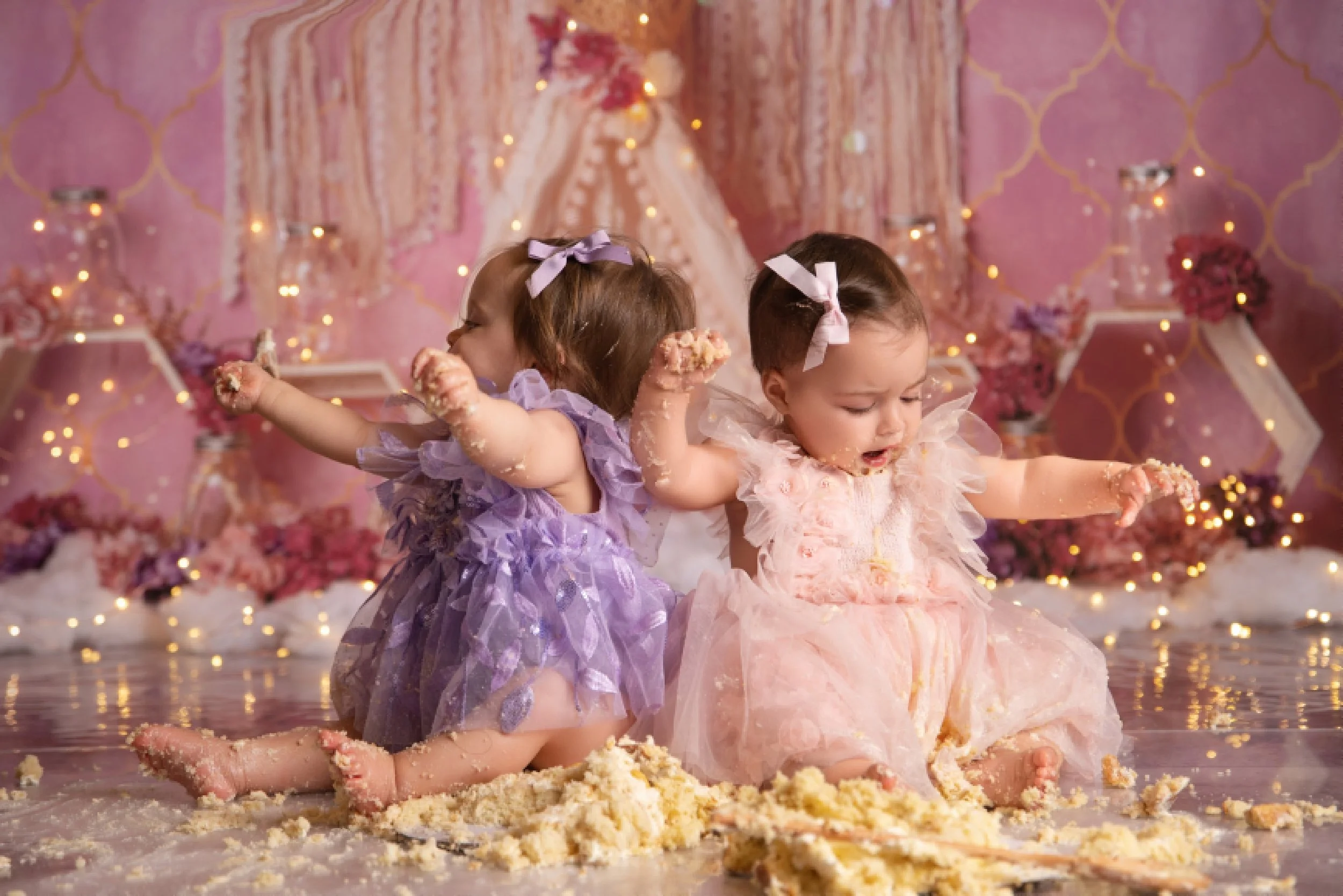
A first birthday already holds so much change. With twins, you are celebrating two babies who grew side by side and may now have completely different personalities. One may love the cake while the other watches, studies the frosting, or crawls away.
That is not a problem to fix. It is the story.
Planning twin cake smash photos simply requires more flexibility than planning for one baby. We need to think about two routines, two comfort levels, clothing for both children, clean portraits, the cake setup, and enough room for each baby to be photographed as an individual.
If you are considering a twin first-birthday session in West Windsor or Mercer County, here is how I recommend making the experience calm, personal, and realistic.
Begin Planning Before the Birthday Rush
My current cake smash photography information recommends scheduling approximately three to four weeks before the birthday when you want the photographs ready for a celebration.
With twins, beginning the conversation earlier can also give us time to discuss:
whether you want one coordinated setup or two visual ideas;
clean portraits before the cake;
individual and together photographs;
the clothing plan;
whether parents or siblings will participate;
food allergies or dietary restrictions; and
what the current twin-session structure includes.
Do not assume that a standard session designed around one baby automatically fits two. Tell me you are planning for twins before booking so we can confirm the appropriate option and expectations.
Coordinate the Theme Without Erasing Their Individuality
Twins do not have to look identical in every photograph.
A coordinated setup can feel connected while still leaving room for two personalities. You might choose one shared color palette and vary the clothing slightly, or use the same general theme with an individual detail for each child.
You might use two shades within one palette, similar clothing with individual accessories, or one shared theme with a personal detail for each baby.
The final setup should support the children, not become so busy that two small faces disappear inside the decorations.
Start With Clean Portraits
Once cake and frosting appear, there is no returning to perfectly clean clothing and faces.
That is why I like to begin with the polished portraits first when the selected session includes them. We can photograph the twins together, create individual images, and include approved family groupings before the mess begins.
Clean portraits can include the twins together, one image of each child, close-up milestone details, natural interaction, and approved family groupings.
Starting clean also gives the babies time to become familiar with the studio before they meet the cake. Some children need to look around, touch the floor, or watch their sibling before they feel comfortable.
Give Each Baby an Individual Moment
The together photographs are important, but twins are not one subject.
Each child deserves images where their own expression, features, and personality can be seen clearly. One baby may give a big smile while the other looks away. If we photograph only the combined moment, it can be difficult to show what makes each child special.
Individual portraits also help when one twin needs a break. Instead of treating the pause as lost time, I may work with the baby who is ready while the other receives a cuddle, snack, diaper change, or quiet moment.
The goal is not to create identical galleries for both children. It is to make sure both are represented thoughtfully.
One Cake or Two?
There is no single answer for every twin cake smash.
Two individual cakes can give each baby personal space and let us see two separate reactions. One shared cake may encourage interaction, but it can also mean one confident baby takes over while the other hangs back.
The decision should consider how the babies normally eat together, whether they share comfortably, allergies or dietary needs, the set layout, and the visual style you want.
Before the session, tell me about any known food allergies, sensitivities, dietary restrictions, or ingredients the babies must avoid. The cake plan depends on the current collection, so confirm whether cake is included or whether you should bring it.
For medical or allergy-specific questions, follow the guidance of your children’s healthcare professional. Photography planning cannot replace medical advice.
Expect Two Different Reactions to the Cake
Parents sometimes imagine both babies smiling, reaching forward, and covering themselves in frosting at exactly the same time.
It might happen—but it is not the standard they need to meet.
One twin may eat immediately while the other touches the cake with one finger, crawls away, or watches their sibling. All of those reactions can create meaningful photographs.
A cake smash records their curiosity, relationship, expressions, and first-birthday stage.
Plan Around Two Routines
Twins may share a schedule, but they do not always become hungry, tired, or overwhelmed together. Consider naps, meals, travel, and the time when both babies are generally most comfortable.
On session day, allow enough time to arrive without rushing. If one baby slept poorly or had an unusual morning, tell me. That information helps me adjust the order instead of forcing the original plan.
Breaks are normal. A diaper change, bottle, familiar snack, cuddle, or few quiet minutes may help one child reset while we continue gently with the other.
What to Bring for Twin Cake Smash Photos
Packing for two babies can feel endless, so focus on the practical items they normally need.
Bring:
diapers and wet wipes;
milk or the drinks they normally use;
familiar dry snacks;
pacifiers, if used;
one or two small comfort items;
simple backup clothing;
a towel;
a change of clothing for a parent who may be holding a frosted baby; and
any cake or food item we agreed you would provide.
Choose familiar snacks rather than introducing a new food during the session. Let me know about allergies and restrictions before the day of photography.
You do not need to bring a large bag of toys. Too many new objects can compete for attention. A familiar item that helps a child settle is more useful than several noisy distractions.
Choose Clothing That Works Together
For twin portraits, coordination usually photographs more naturally than several unrelated colors and patterns.
Try the same outfit in two colors, similar textures with different details, one palette with individual accessories, or matching clothing if that reflects your family’s style.
Babies should be able to sit, crawl, stand with support, and move comfortably. Avoid clothing that scratches, slips, or needs constant adjustment.
If family members will participate, choose the babies’ clothing first and coordinate the adults around it. Confirm the current collection details.
Let Their Relationship Lead Some Photographs
Some of the most meaningful twin images may happen between planned poses.
One baby may reach toward the other. They may laugh at the same sound, exchange a look, hold hands briefly, or become fascinated by what their sibling is doing.
I guide the setup and keep the babies safe, but I also watch for those natural interactions. The photographs do not need both children looking at the camera in every frame.
A balanced gallery can include together portraits, individual images, shared curiosity, close details, family connection, and the wonderfully messy cake stage.
What If One Twin Cries?
We slow down.
Crying does not mean the session has failed. It means a baby needs something—comfort, food, a clean diaper, space, or simply more time.
We can adjust the order, photograph the baby who is ready, invite a parent closer, or pause the cake portion. Parents can help most by remaining calm while we understand what the child needs.
Twin Cake Smash Photography in West Windsor, NJ
My appointment-based studio is in West Windsor and welcomes families from Princeton and surrounding Mercer County and Central New Jersey communities.
A studio session gives us a prepared setup, controlled lighting, space for clean portraits and the cake smash, and protection from changing October weather.
Before booking for twins, contact me with both babies’ names, their birthday, the theme or colors you are considering, any allergy or dietary information, who you want photographed, and when you need the finished images. I can then explain which current option fits the plan.
For a broader schedule covering theme selection, clothing, and when to plan the photographs, read my first-birthday photography timeline.
Frequently Asked Questions About Twin Cake Smash Photos
Do twins need two separate cakes?
Not always. Two cakes give each baby personal space and separate reactions, while one shared cake may create interaction. Discuss the babies’ habits, food needs, set layout, and visual goals before deciding.
Should twins wear matching outfits?
They can, but matching is not required. Coordinated colors or similar clothing with individual details can create a connected look while preserving each child’s personality.
What if one twin loves the cake and the other refuses it?
That is completely normal. The session can still include clean portraits, individual photographs, twin interaction, family connection, and each baby’s honest reaction. Neither child needs to perform the same response.
Can parents and siblings join the photographs?
Participation depends on the current collection and session structure. Tell me who you want included before booking so we can confirm the correct option, timing, and clothing plan.
What allergy information should parents provide?
Tell me about any known allergies, sensitivities, dietary restrictions, or ingredients the babies must avoid. Confirm who is providing the cake. For medical questions or uncertainty about a food, consult the children’s healthcare professional.
When should we schedule twin first-birthday photographs?
If you need the images for a birthday celebration, the current studio guidance recommends photographing approximately three to four weeks beforehand. Begin the planning conversation earlier so there is time to confirm a twin-appropriate session, theme, clothing, and cake plan.
Celebrate Two Babies Without Expecting Two Identical Experiences
Twins may share a birthday, a set, and a cake-smash session, but they will bring two different personalities into the studio.
That is exactly what makes the photographs meaningful.
We can create the polished portrait of them together, the individual images that honor each child, the connection between siblings, and the unpredictable cake reactions that show who they were at one year old.
If you are planning twin first-birthday photographs in West Windsor, Princeton, or Mercer County, explore my current cake-smash photography options and contact me before booking.
Tell me about both babies and the photographs you hope to create. I will help you plan the next step.
— Svetlana
Tiny Moments by Svetlana / Svetlana Boyko Photography
How to Choose a Maternity Gown for Photos: Fitted, Flowing, Ruffled, and Fabric Styles
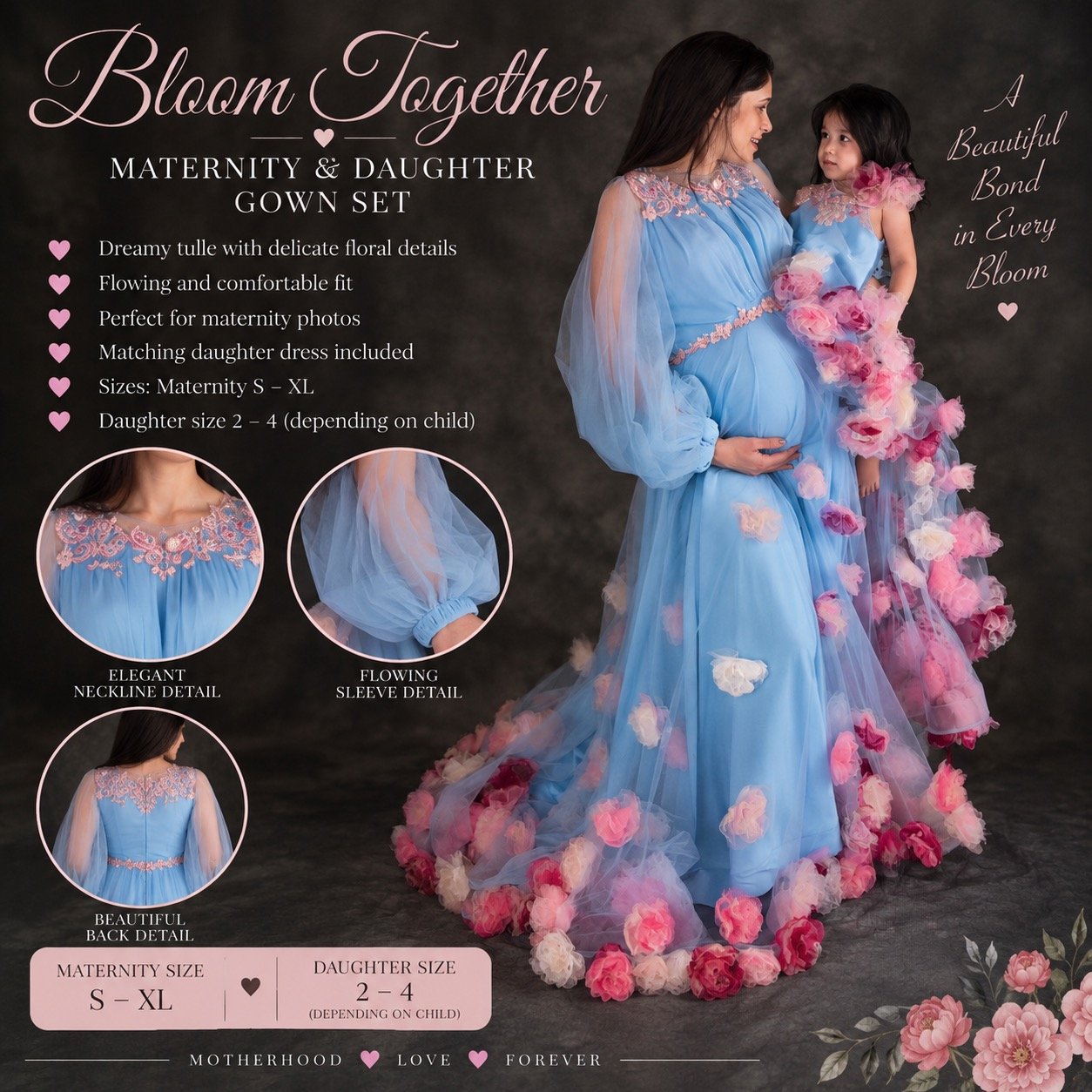
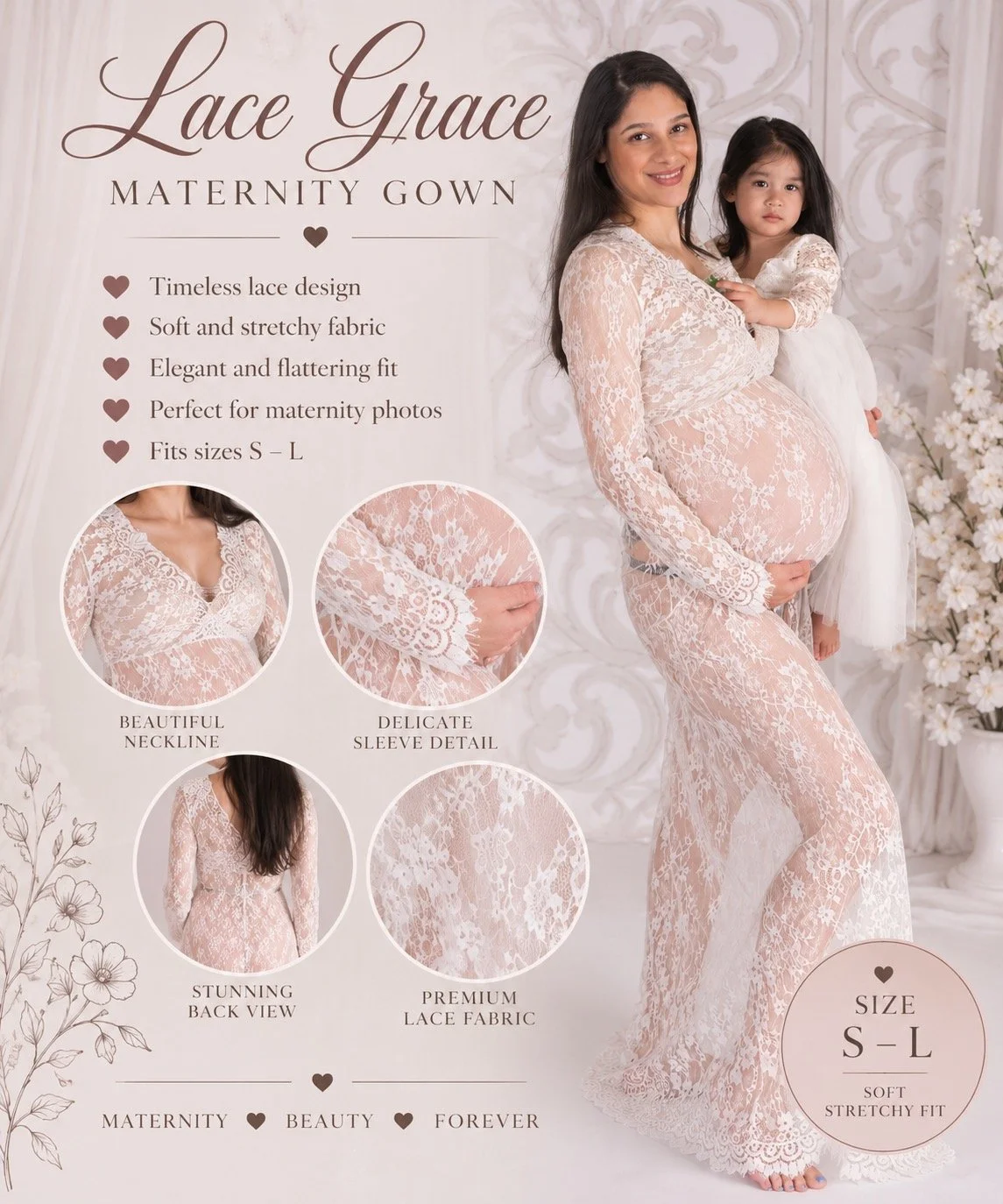
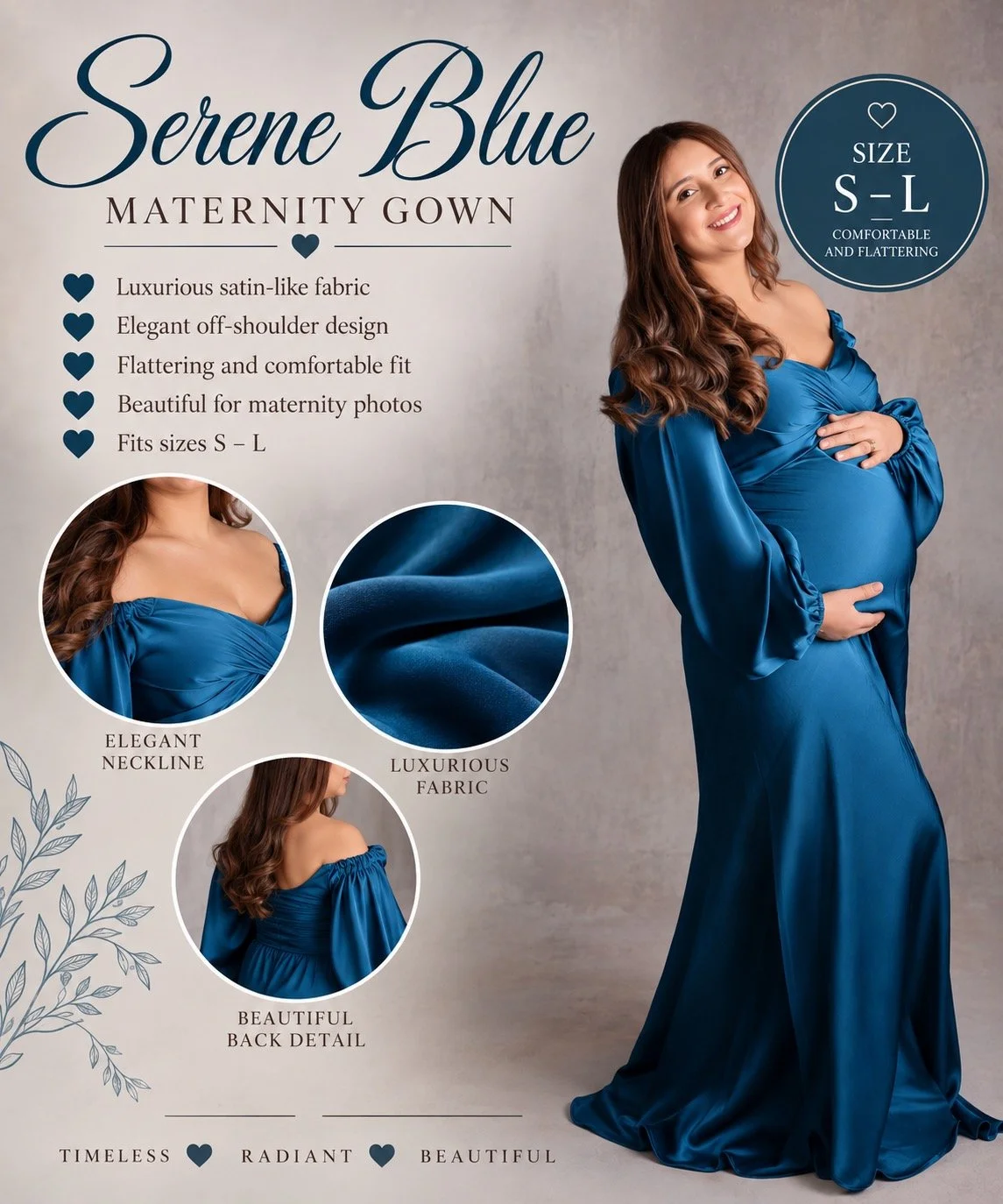
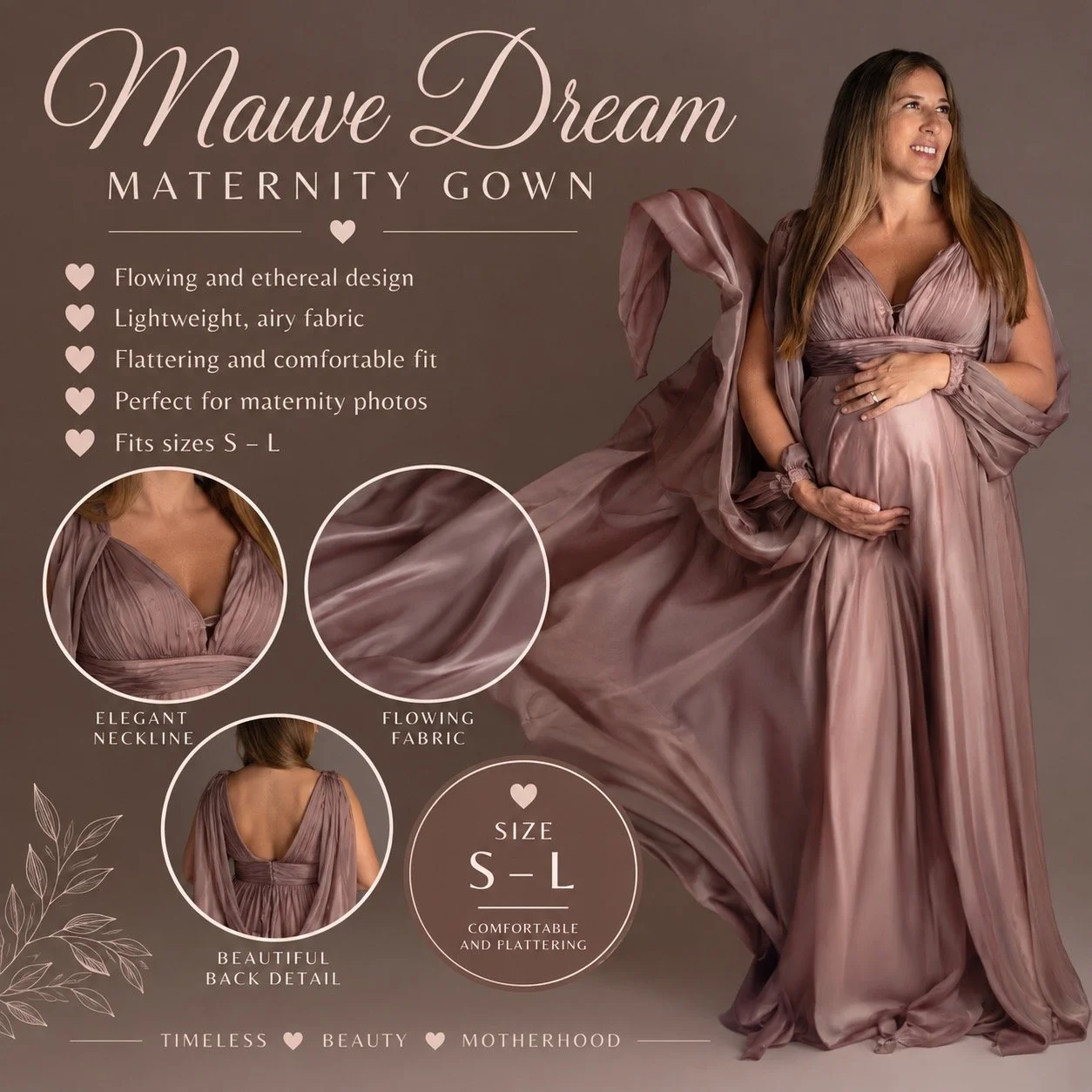
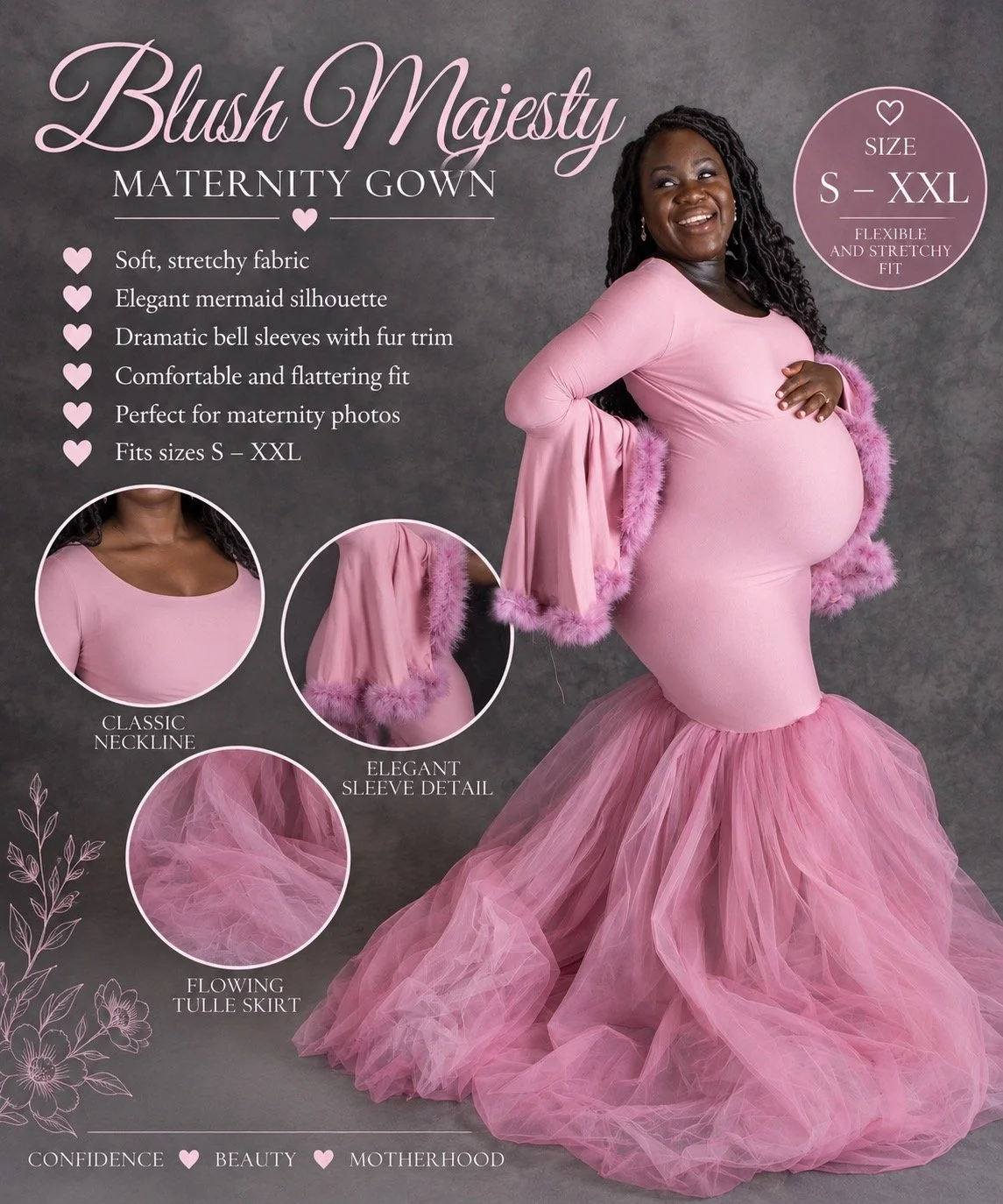
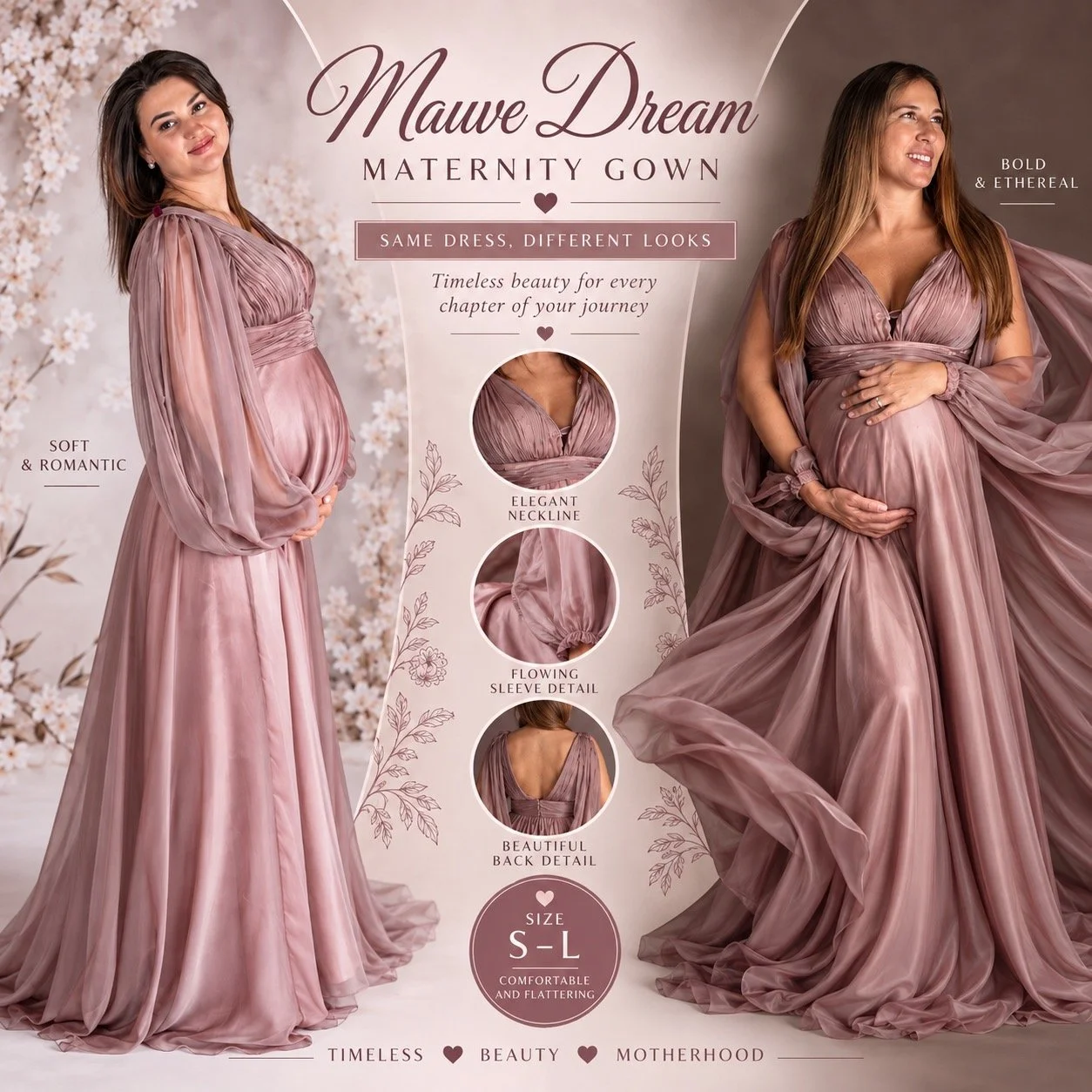
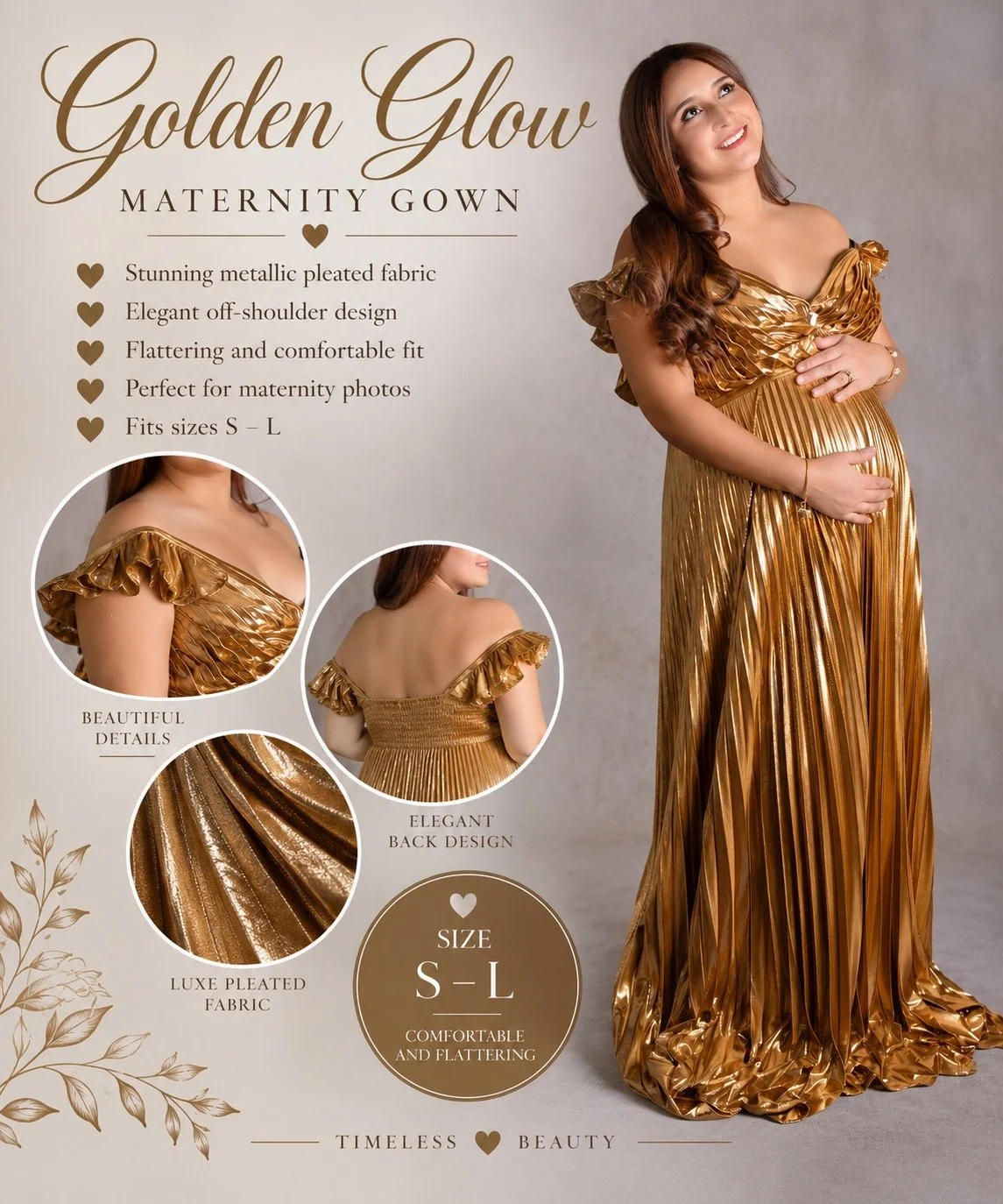

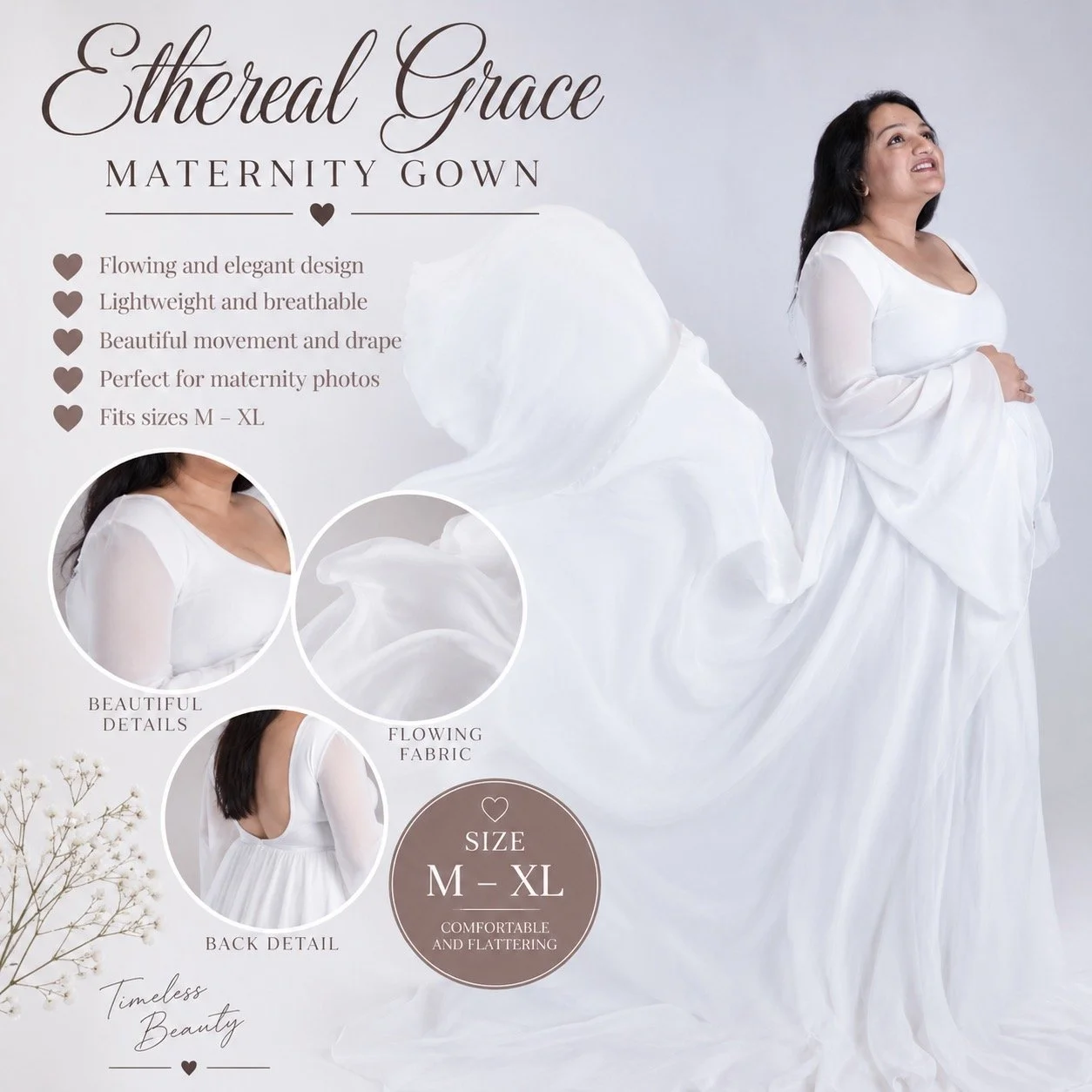
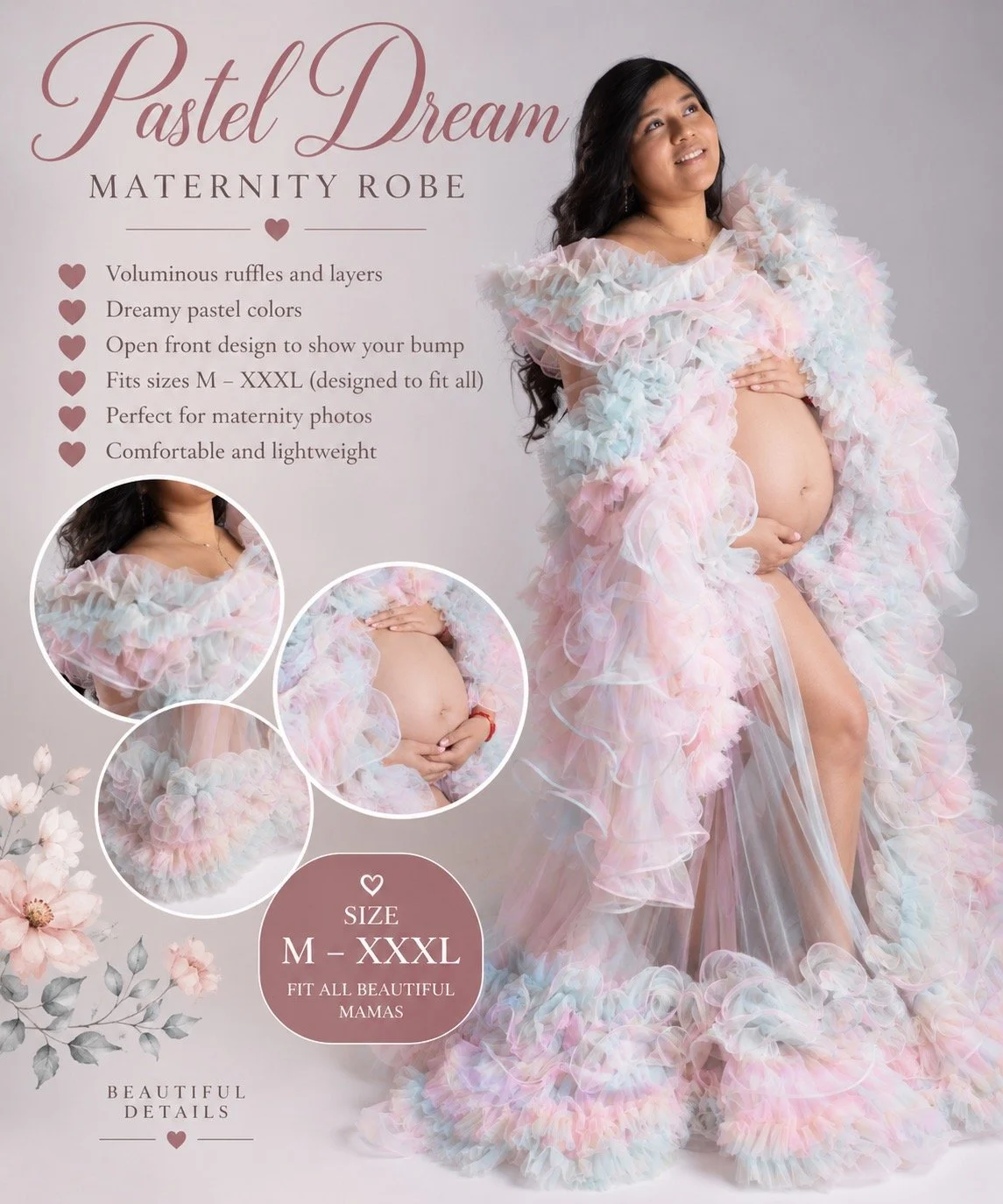
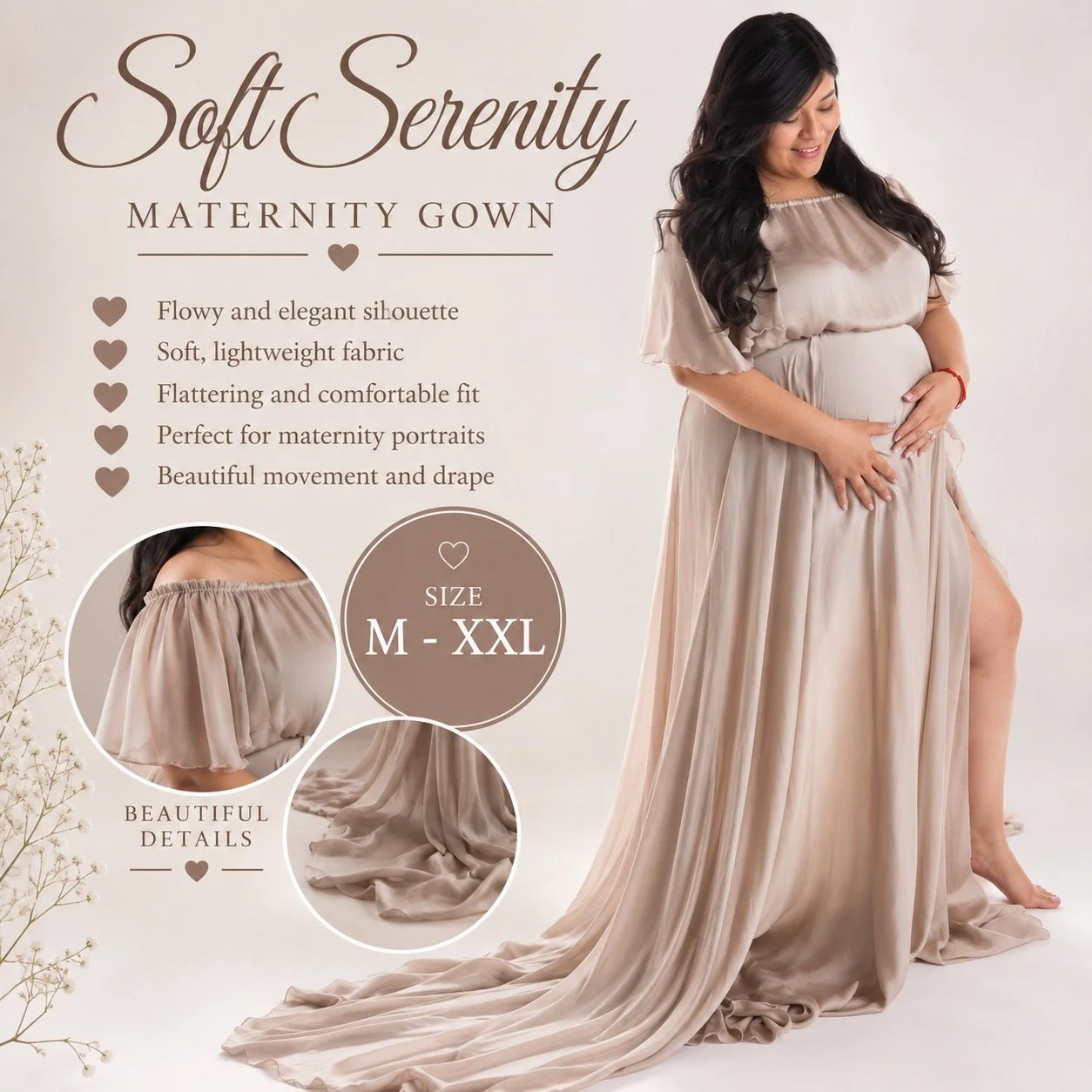


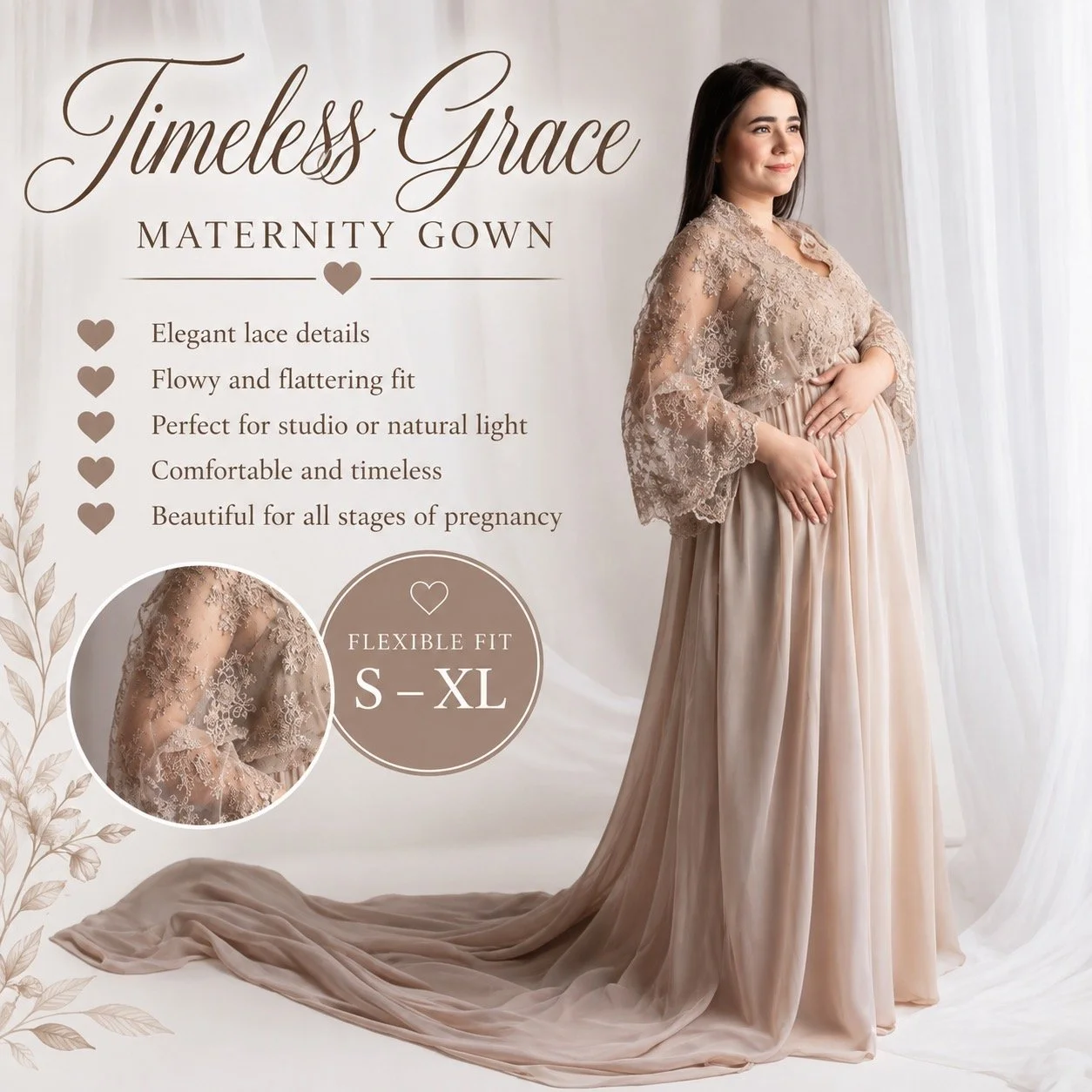
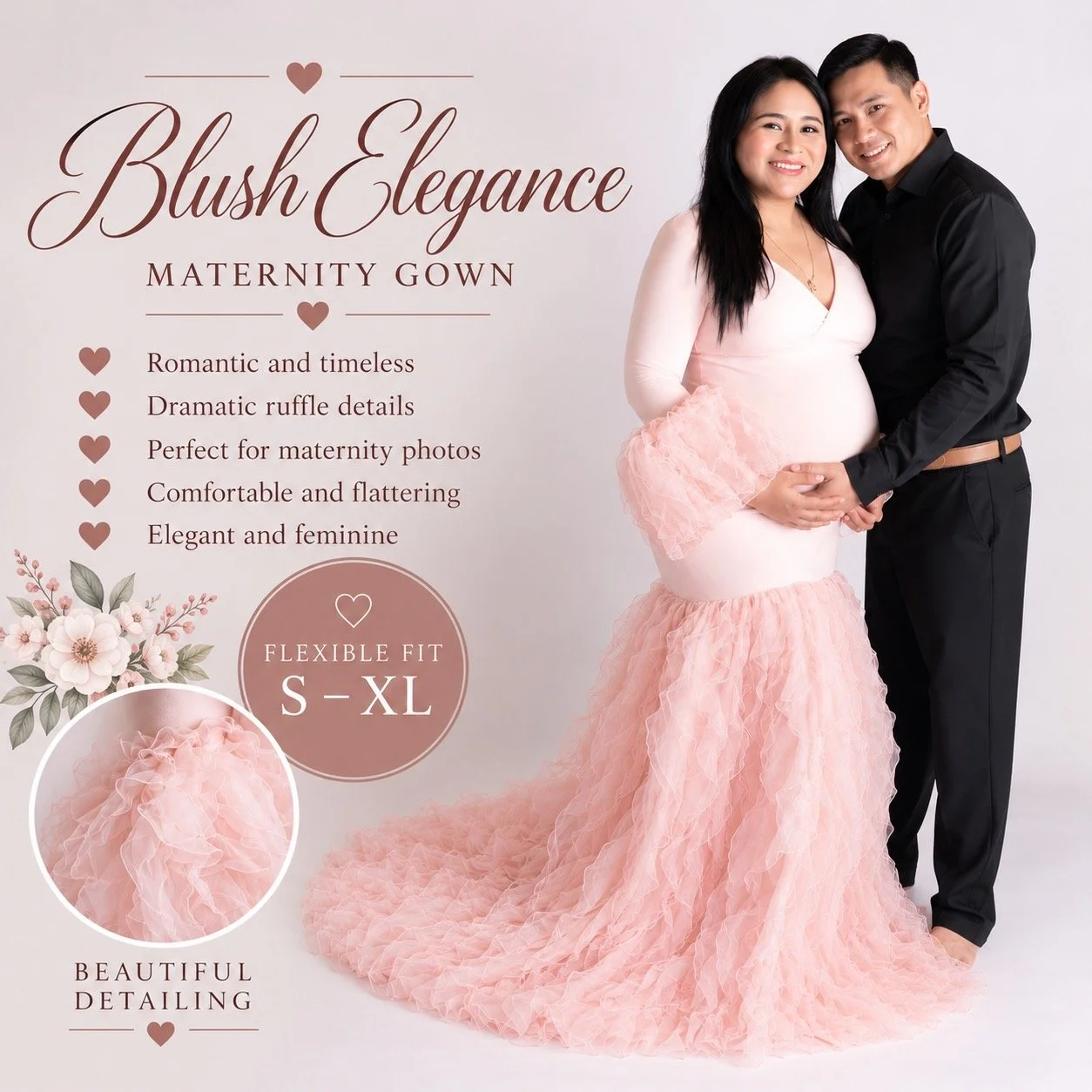
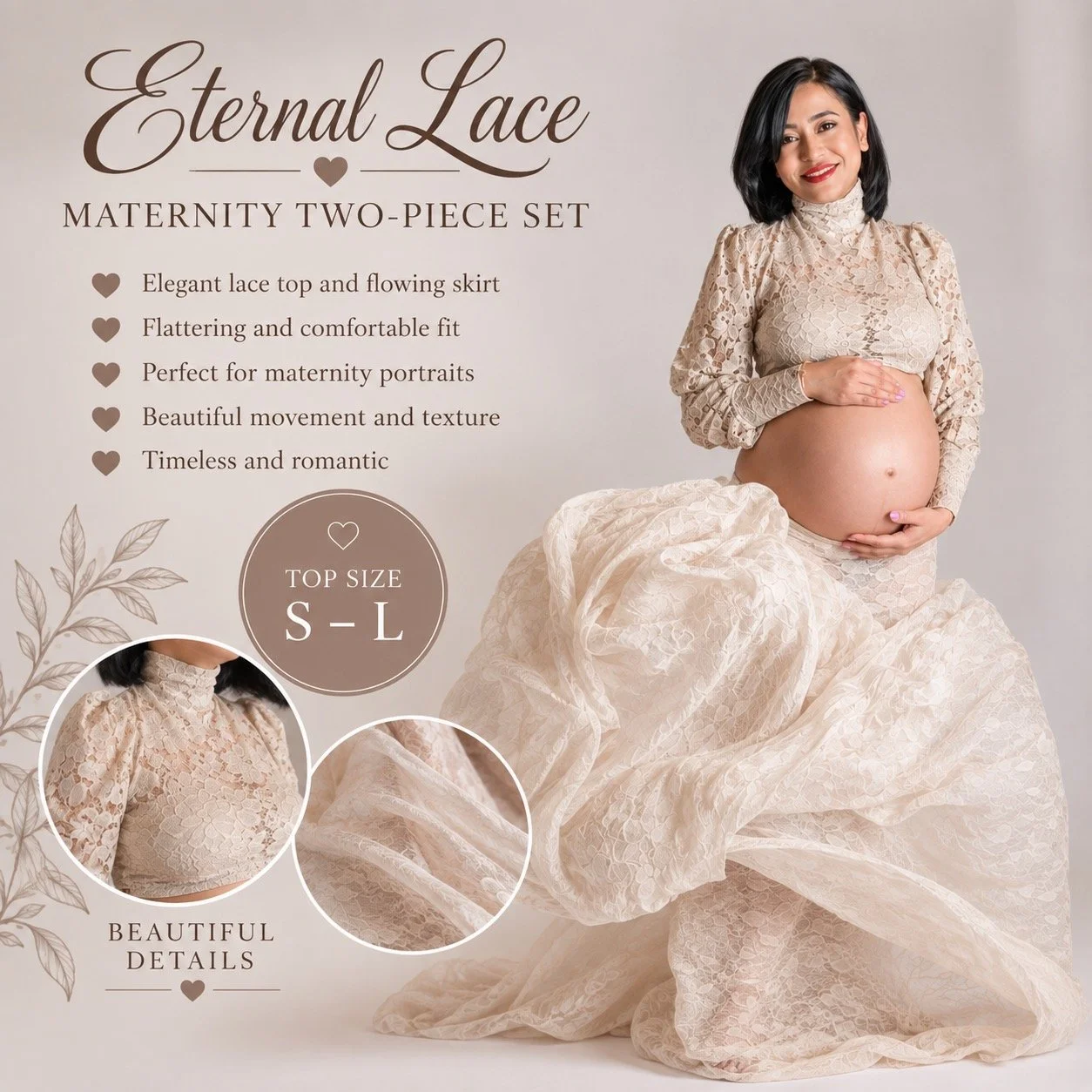
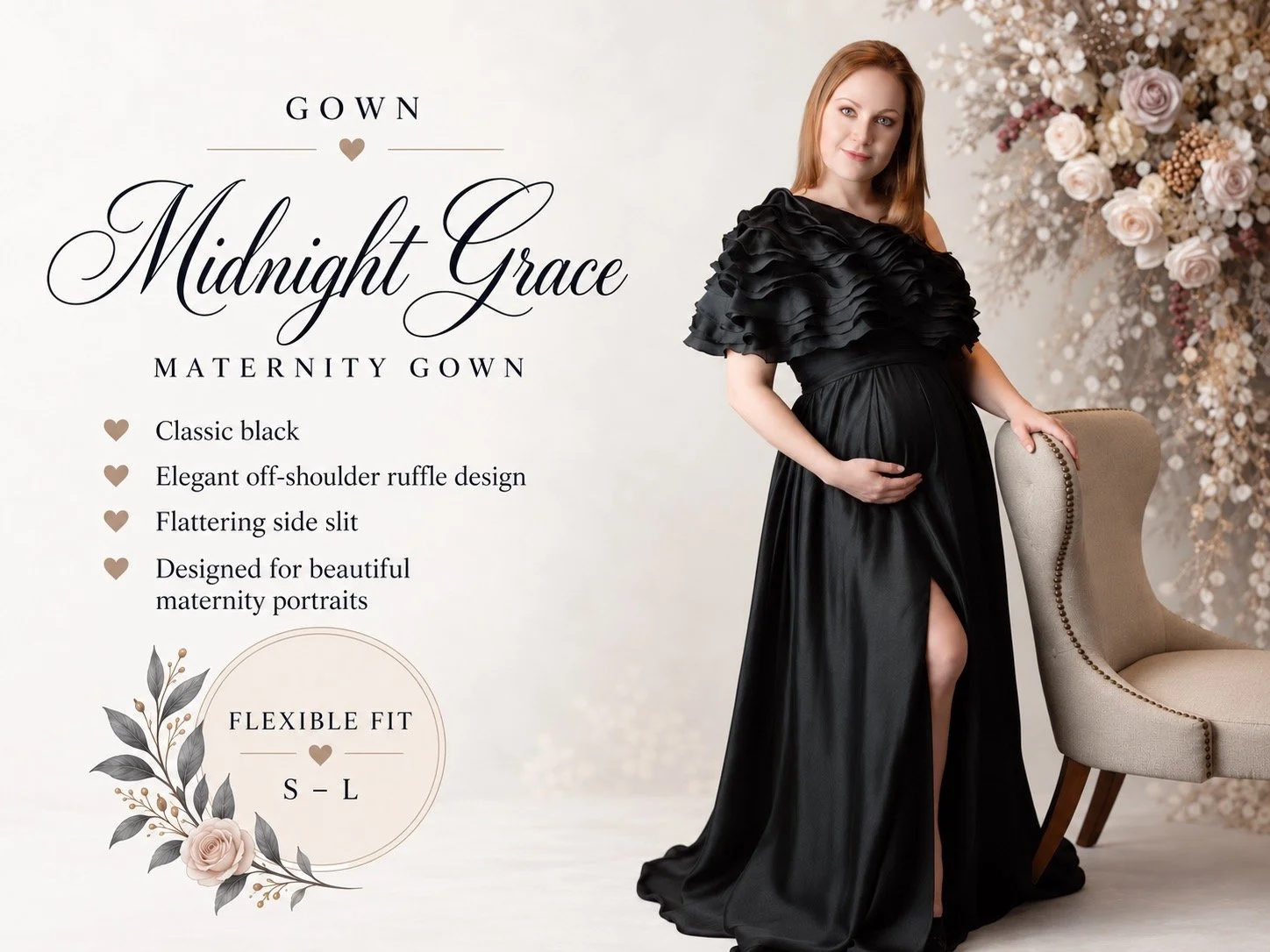
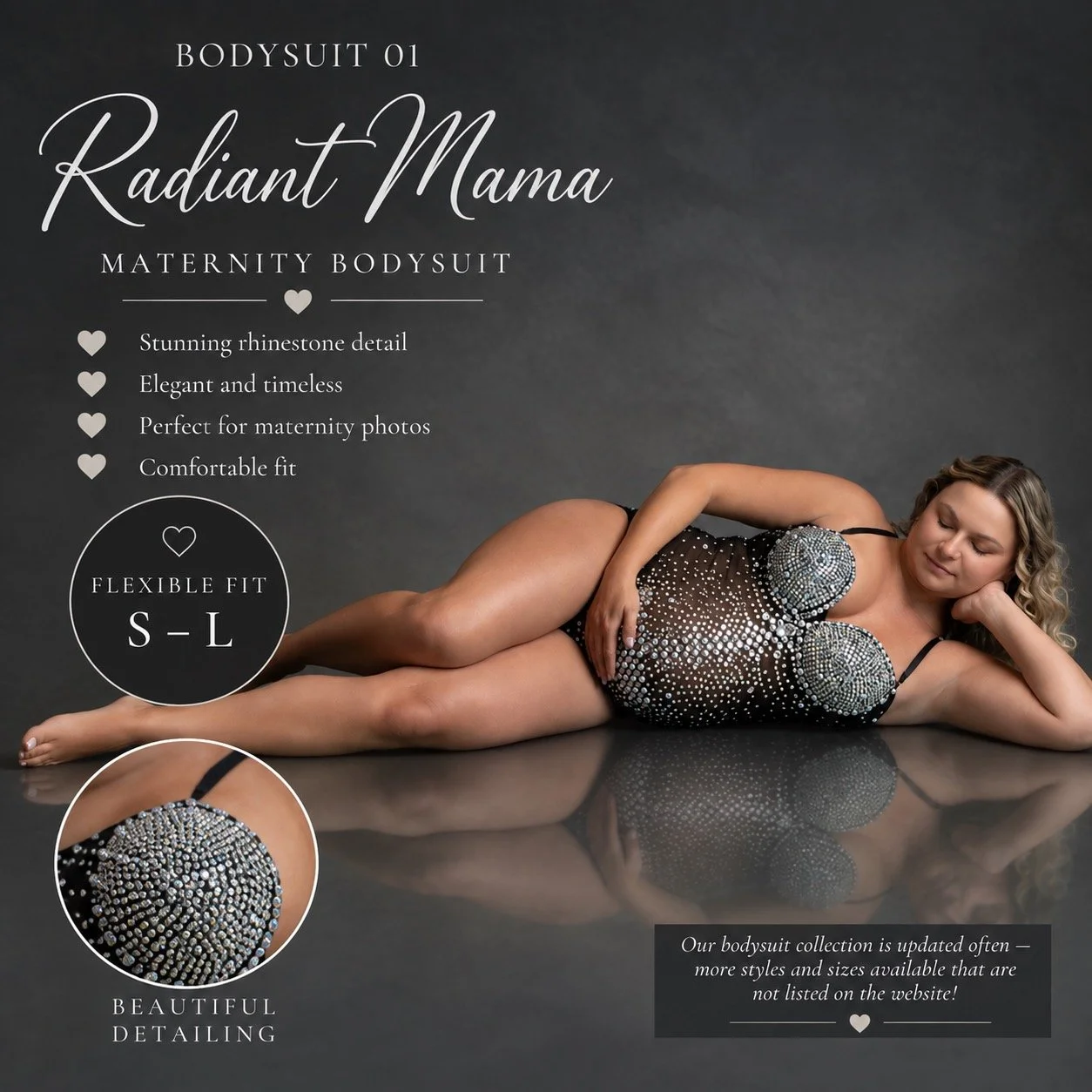
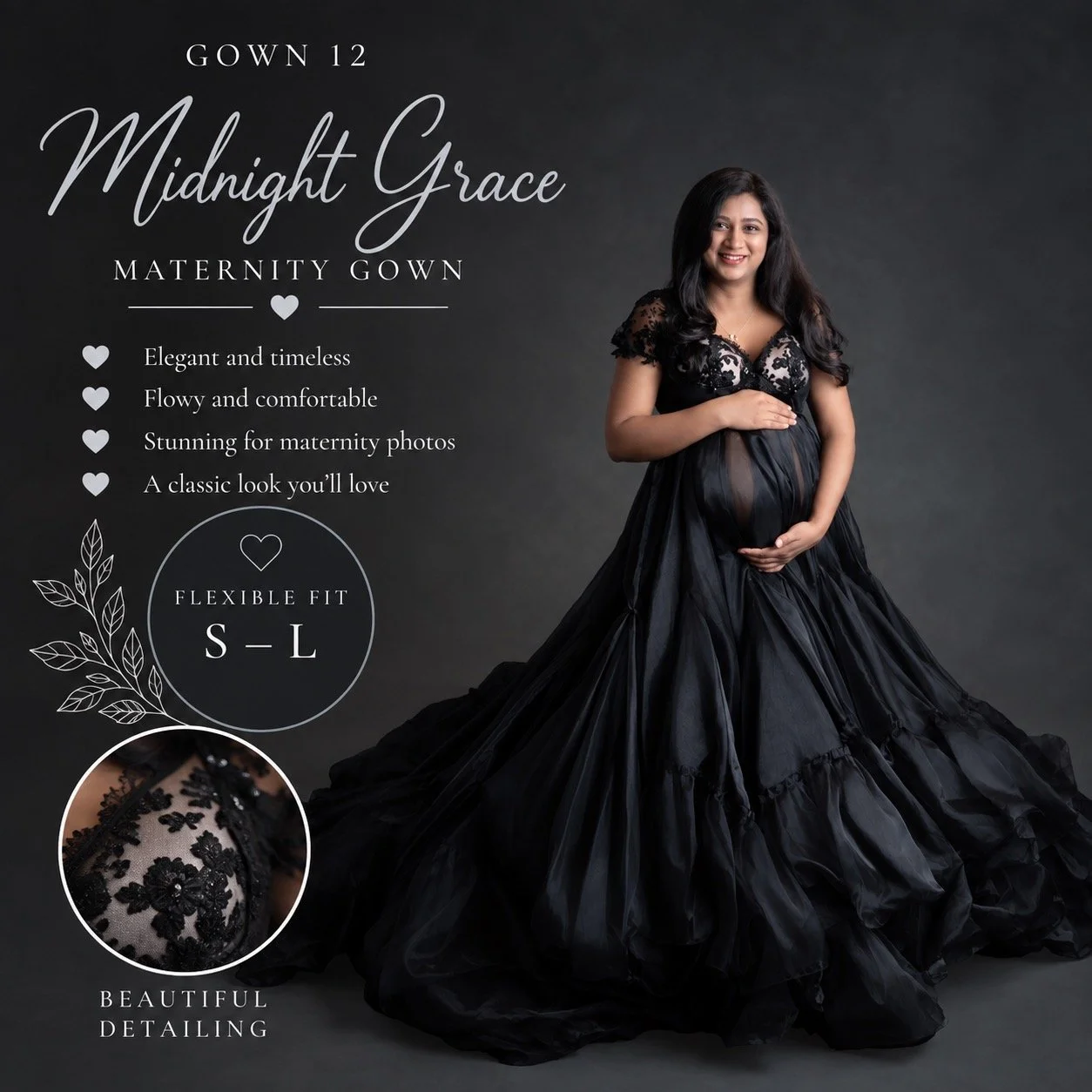
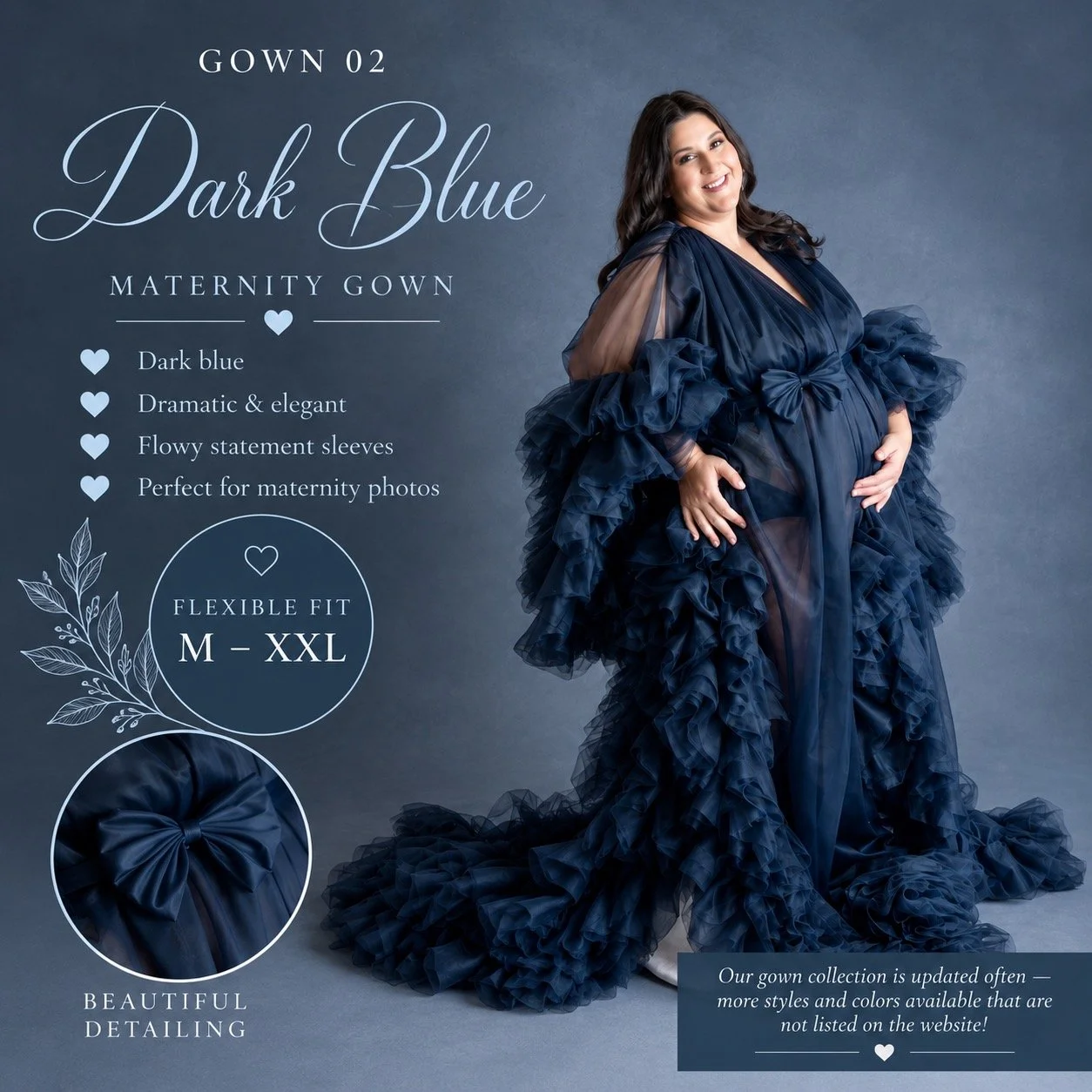
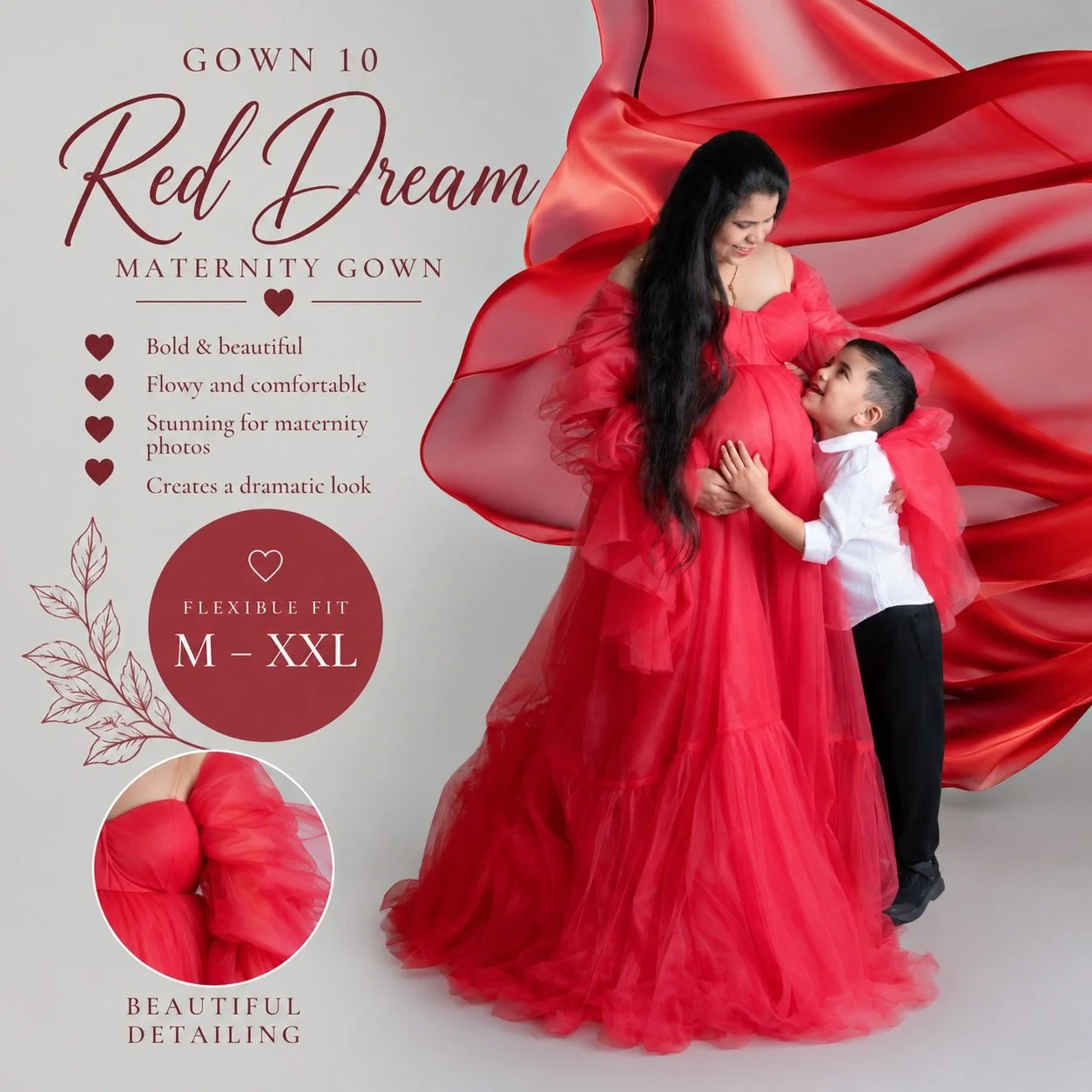
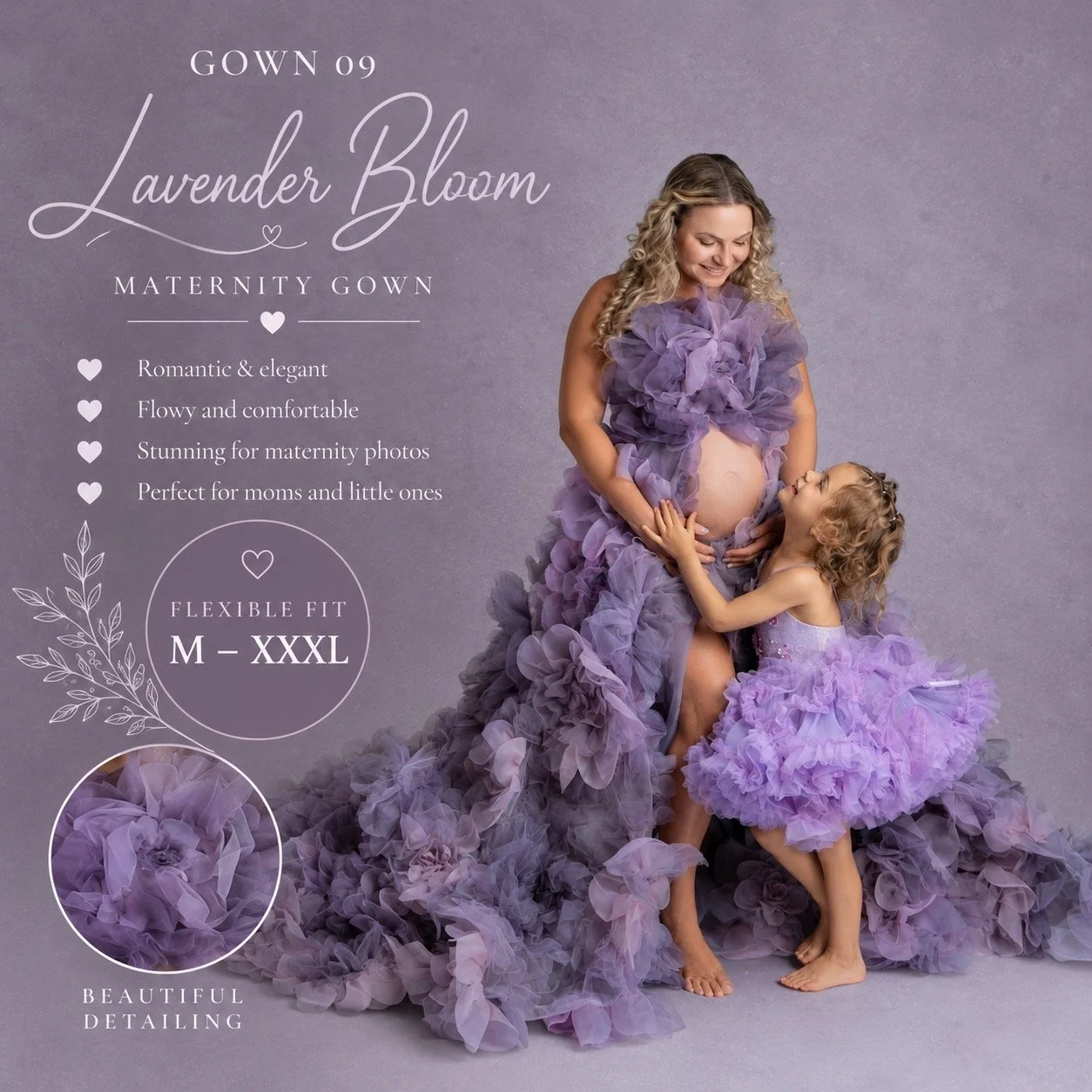
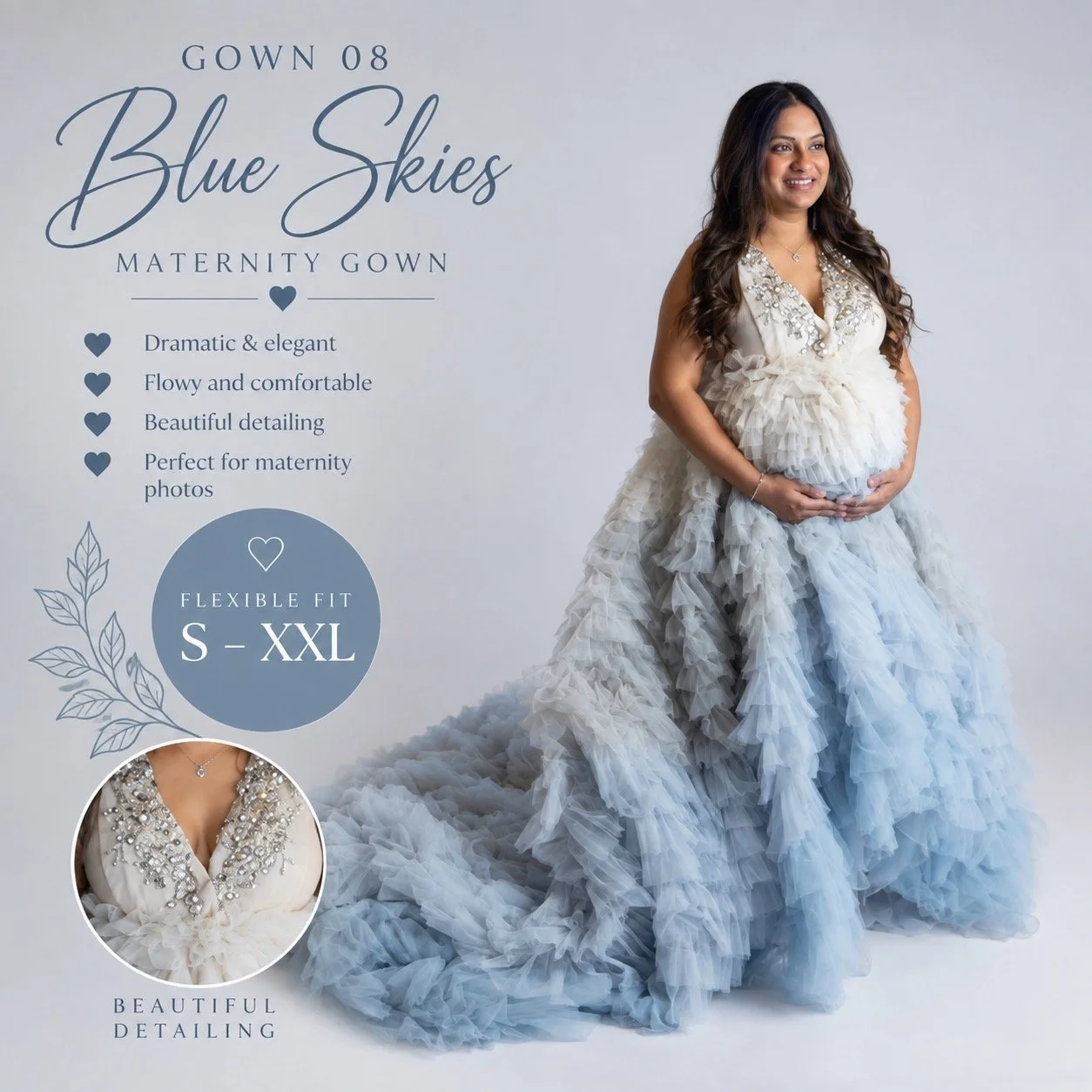
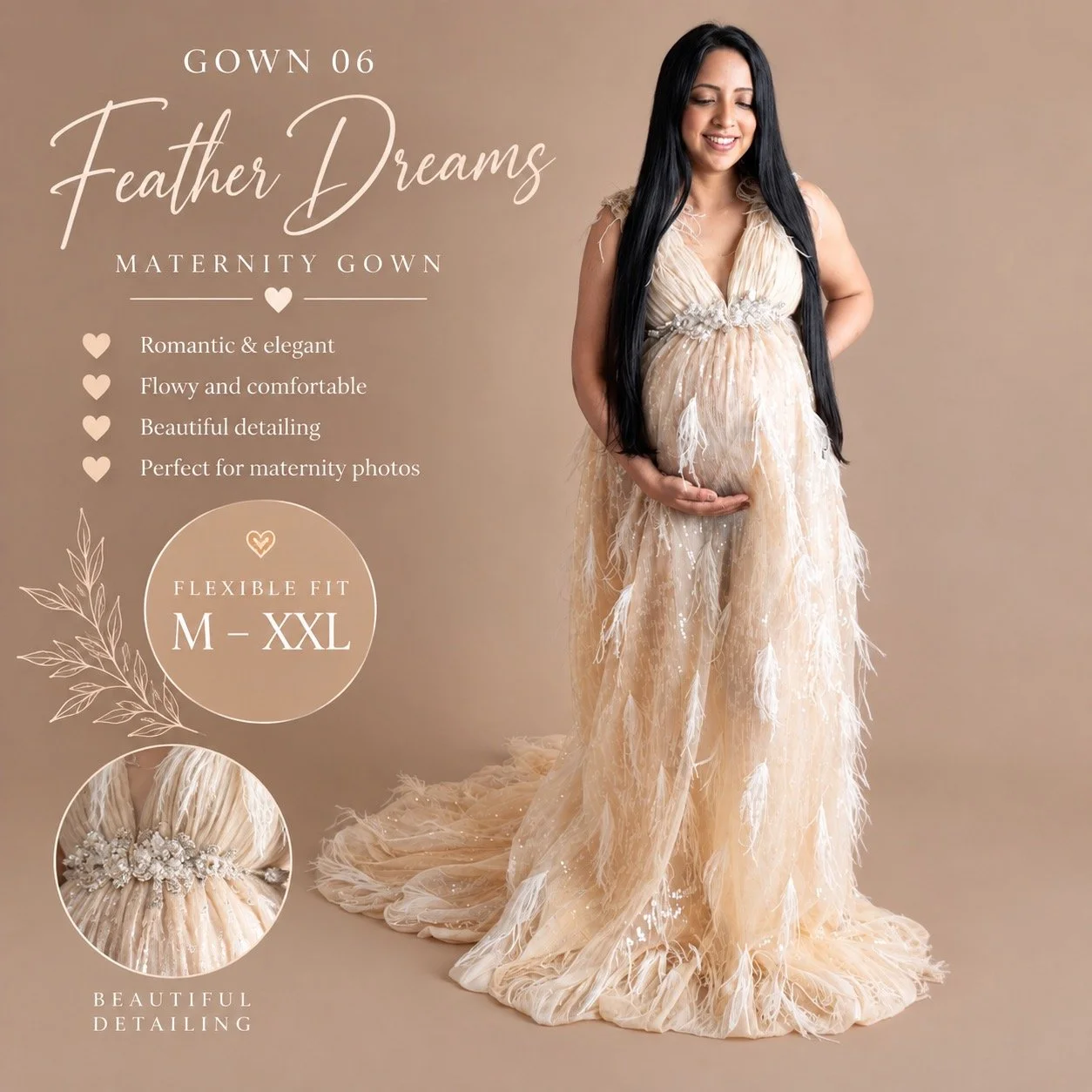
Choosing what to wear for maternity photographs can feel like a much bigger decision than it needs to be.
My first advice is to take a breath. You do not need to arrive with a complete styling plan or purchase a closet full of dresses.
For my maternity photography in New Jersey, I offer a studio wardrobe with many different colors, textures, and silhouettes. I also guide you through the choices so the final look feels like you—not like a costume you selected only because it looked beautiful on someone else.
The best maternity gown is not simply the most dramatic dress. It is the one that supports the way you want to feel in your portraits.
Begin With How You Want Your Photographs to Feel
Before thinking about color or fabric, think about the mood you love.
Do you imagine something soft and romantic? Clean and modern? Elegant and timeless? Dramatic and editorial? Warm and connected with your family?
Those words give us a much better starting point than asking which gown is “best.”
A flowing white gown and a fitted black gown can both be beautiful, but they create very different photographs. One may feel light and delicate. The other may feel sculptural and powerful.
Save a few examples that feel right to you. I can identify the common thread—perhaps shape, color, movement, or simplicity—and translate it into a session plan.
Fitted Maternity Gowns: Simple, Modern, and Shape-Focused
A fitted gown follows the shape of your body and clearly defines your baby bump. This style works beautifully when you love a clean, polished portrait where the silhouette is the main focus.
Fitted gowns can feel:
modern and minimal;
timeless and elegant;
dramatic with darker colors;
soft with neutral or pastel tones; or
more detailed when they include lace, sleeves, or texture.
Because the shape is simple, posing and light make a meaningful difference. I guide you one step at a time, including where to place your hands and how to shift your weight.
A fitted gown is also a useful choice when a partner or child will join you. Its clean shape lets the connection between people remain the focus.
Flowing Gowns: Softness, Movement, and Romance
Flowing gowns use fabric to create movement and a softer outline. They can feel romantic, airy, and graceful, especially when the skirt or train is arranged around you.
Flowing fabric does not mean your shape disappears. The gown can still define the bump while giving us more material to arrange, lift, layer, or spread.
In the studio, we can control the fabric carefully and create movement without depending on the wind. Outdoors, a flowing gown can be beautiful too, but we also have to consider walking, the ground, temperature, and the location itself.
If you love the look of fabric in motion, tell me. It helps me plan both the gown and the type of portraits we create.
Ruffles, Tulle, and Floral Details: A Statement Look
Some mothers want one look that feels completely different from everyday life. This is where ruffles, tulle, floral appliqués, layered skirts, and other statement details can be wonderful.
These gowns bring their own texture and visual energy. When a gown already has a lot of detail, I usually let it be the statement. Simple jewelry and an uncluttered background keep the image balanced.
A statement gown does not need a complicated pose. Beautiful light and a quiet portrait may be enough.
If you love dramatic gowns but worry they may feel like “too much,” consider using one as a contrasting look rather than the only look in your session.
Bodysuits, Robes, and Fabric Styling: Artistic and Personal
A bodysuit, open robe, draped fabric, or more minimal studio look can create portraits that feel artistic and focused on the body’s shape. These options can range from soft and delicate to bold and editorial.
The most important question is not whether a style is fashionable. It is whether you feel comfortable in it.
There is no pressure to choose a more revealing look. A fully covered gown can be just as striking. If you are curious about a robe, bodysuit, or fabric style, we can discuss the amount of coverage, the background, and the overall feeling before the session.
Studio sessions are especially helpful for these looks because we have privacy, controlled light, and time to make thoughtful adjustments.
Light Colors or Dark Colors?
Color changes the mood of a portrait, but there is no universal color that every expecting mother should wear.
Light tones can feel soft, bright, and romantic. Black, navy, emerald, deep red, and other rich colors can feel dramatic and elegant.
Metallic, sequin, or richly textured gowns add another dimension because the light interacts with the fabric.
When choosing color, I consider:
the mood you want;
your skin tone and hair color;
the background and lighting;
whether other family members are participating; and
how this look will contrast with your other gown choices.
Choose a color because it supports the portrait you want—not because you have been told every maternity session must use neutrals.
Choose Looks That Feel Different, Not Just More
If your current session option allows more than one wardrobe look, use that opportunity to create variety.
For example, you might combine:
one fitted gown with one flowing gown;
one soft neutral look with one dramatic dark color;
one classic dress with one robe or fabric look; or
one individual portrait look with one family-friendly gown.
Changing from one blush fitted gown to another very similar blush fitted gown may not create as much variety as choosing two genuinely different silhouettes.
The exact number of wardrobe changes depends on the current session you select, so confirm those details before planning. Once I know what is included, I can help you choose looks that work together without feeling repetitive.
Coordinate Your Partner and Children Around Your Gown
If your partner or children will be photographed, choose your gown first. It is much easier to coordinate their clothing around one main look than to select everyone’s outfits separately and hope they work together.
They do not need to match your exact color. Instead, choose a quiet palette that supports your gown without competing with it.
Avoid competing logos and several unrelated patterns. Texture is welcome, but the clothing should not pull attention away from faces and connection.
My guide to family maternity photos with your partner and children goes deeper into helping everyone feel comfortable and preparing older children without pressure.
Studio or Outdoor Session: Let the Location Guide the Gown
Your location affects which gown will be easiest to wear and how it will photograph.
In my West Windsor studio, we can control the lighting, temperature, background, privacy, and fabric placement. It is also easier to change looks and use delicate gowns without worrying about wet grass, wind, or uneven ground.
Outdoor maternity photographs have a different beauty. Natural scenery and evening light can create a warm, organic feeling. For an outdoor gown, I think about movement, walking distance, footwear, the season, and how the fabric will interact with the setting.
Neither option is automatically better. The right choice depends on the photographs you want and the experience that will make you most comfortable.
What to Do Before Your Maternity Session
You do not need to decide everything alone, but a little preparation makes styling easier.
Before your session:
Save a small group of maternity portraits you genuinely love.
Notice whether you repeatedly choose fitted, flowing, dramatic, or soft looks.
Tell me if there are colors you love or never wear.
Let me know who will be participating.
Discuss any coverage, fit, or comfort concerns before session day.
Confirm how many looks are included in your current session option.
The goal is not to bring every possibility. It is to arrive with a clear enough direction that the final choices feel calm.
Frequently Asked Questions About Maternity Gowns
Do I need to buy a gown for my maternity photographs?
No. My West Windsor studio currently offers a maternity wardrobe with a range of gowns, robes, bodysuits, fabrics, colors, and silhouettes. Review the current session details and discuss your preferences with me before the appointment.
Is a fitted or flowing maternity gown more flattering?
Both can be flattering. A fitted gown emphasizes the bump and creates a clean silhouette. A flowing gown adds softness and movement. Posing, light, fit, and your comfort matter more than choosing one category that is supposedly best for everyone.
How many maternity looks should I choose?
The number depends on the current session option you book. If more than one look is included, I recommend choosing styles that create visible variety—for example, one fitted and one flowing gown—rather than several nearly identical dresses.
Can my partner and children be included?
Family participation depends on the session you select. When they are included, I recommend choosing your gown first and coordinating their clothing with simple colors and minimal patterns.
What if I am unsure whether a gown will fit?
Share your concerns before the session. I can help narrow the choices and prepare alternatives. Fit is not only about size; stretch, coverage, sleeves, neckline, and the way a fabric drapes can all affect how comfortable a gown feels.
When should I choose my maternity gown?
Begin thinking about style before the session rather than waiting until you arrive. You do not need a final answer immediately, but sharing favorite looks in advance gives us time to build a thoughtful plan.
Your Maternity Portraits Should Still Feel Like You
The studio wardrobe is there to make your experience easier, not to give you another list of rules.
You may feel most beautiful in a quiet cream gown, a fitted black silhouette, layers of tulle, or a dramatic color. All of those choices can be right.
My role is to listen, help you compare the options, guide the styling, and pose you in a way that feels natural and flattering. Your role is simply to tell me what you love and what makes you feel comfortable.
If you are planning maternity portraits in West Windsor, Princeton, or Mercer County, you can explore my current maternity photography options and contact me with your expected due date and the styles you are drawn to.
And when your baby arrives, newborn photography can continue the story into the next chapter.
— Svetlana
Tiny Moments by Svetlana / Svetlana Boyko Photography
How Many Hours of Event Photography Do You Need? A 2-, 4-, and 6-Hour NJ Guide
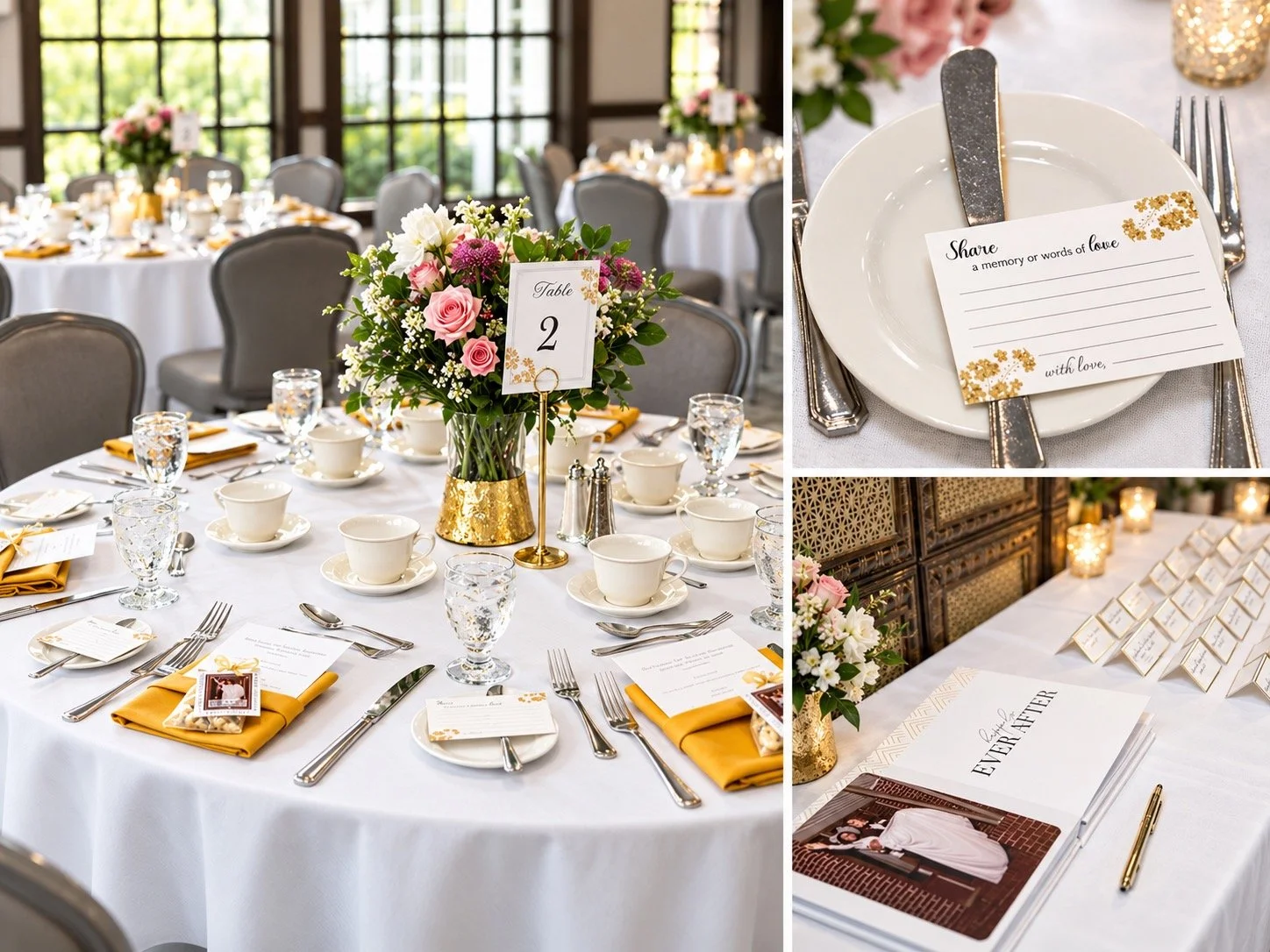
One of the first questions clients ask when planning a birthday, baptism, baby shower, Sweet 16, intimate wedding, or corporate celebration is simple: How many hours of photography do we actually need?
The answer is not based only on the length of the party. Portraits before guests arrive, travel, venue access, formalities, family groupings, and detail photographs all affect the timeline.
My current event photography in Mercer County includes two-, four-, and six-hour coverage options. Here is how I recommend comparing them so you choose enough time to tell the story you care about—without selecting hours simply because they sound standard.
Begin With the Moments, Not the Package
Before deciding on two, four, or six hours, write down the moments you would be disappointed to miss.
Your list may include:
the finished room before guests enter;
portraits of the guest of honor;
immediate-family and extended-family photographs;
guest arrivals and greetings;
a ceremony, blessing, entrance, speech, or presentation;
candle lighting, cake cutting, or another tradition;
dancing and candid guest interactions; and
one final group photograph.
Place those moments in chronological order. If they are close together, shorter coverage may be enough. If they stretch across several phases or locations, you need more breathing room. The photography timeline should protect the story, not merely copy the invitation time.
When Two Hours of Event Photography May Be Enough
Two hours can work beautifully for a shorter, focused celebration with a clear schedule and one location.
It may be a practical fit for:
a small birthday gathering;
a baby shower with a few planned traditions;
a baptism or religious celebration followed by a short reception;
a private dinner;
a corporate gathering with one main program; or
another event where the essential moments happen in a compact window.
With two hours, priorities matter. There may be time for décor, key family portraits, candids, and one or two formalities, but there is less room for delays or a long portrait list.
Prepare the family grouping list in advance and tell participants when to arrive. Schedule empty-room photographs before guests enter, because coats, bags, gifts, and drinks quickly change the finished setup. Two hours works best when priorities are clear and the photographer does not need to cover several things at once.
When Four Hours Creates a More Complete Story
Four hours gives us room to move beyond a short highlight collection and create a fuller record of the celebration.
This amount of coverage may fit an event that includes:
décor and detail photographs before guests arrive;
individual and family portraits;
arrivals and cocktail time;
a ceremony or formal entrance;
speeches, blessings, candle lighting, or cake cutting; and
enough candid time to show how the celebration felt.
Four hours can suit Sweet 16s, milestone birthdays, larger baby showers, corporate celebrations, baptisms with receptions, and intimate weddings with a focused schedule. It adds flexibility when a speech starts late or relatives take time to gather, and it gives us more opportunity to photograph groups naturally.
It does not automatically cover the entire event. Decide whether that four-hour story should begin before guests arrive, at the ceremony, during cocktail time, or later when formalities and dancing are scheduled.
When Six Hours Makes Sense
Six hours is designed for events with several phases, a longer list of important moments, or a story that develops across much of the day.
It may be appropriate when you want to include:
preparation or pre-event portraits;
more extensive décor and detail coverage;
a ceremony plus reception;
several family and guest groupings;
entrances, speeches, traditions, and entertainment;
dinner or program coverage;
dancing and candid interactions; and
more than one location or a meaningful transition between spaces.
An intimate wedding may need six hours even with a small guest list because the day can include preparation, ceremony, portraits, reception details, speeches, and dancing. A large Sweet 16, Bar or Bat Mitzvah, anniversary, or corporate celebration may also need extended coverage when the program unfolds gradually.
Longer coverage allows the gallery to show change: the quiet room, anticipation, traditions, relaxed conversations, and later energy.
Event Length and Photography Coverage Are Not the Same
If your invitation says 5:00–9:00 p.m., it may seem obvious to book four hours. But consider what happens before 5:00.
Do you want completed décor without guests in the background? Will the guest of honor and family take portraits before the room opens? Does the ceremony begin elsewhere? At the other end, will a special dance, cake cutting, send-off, or group photograph happen during the final minutes?
Photography can begin before the invitation time and end before the party does. It can also begin later when the first hour is mostly guest arrival. The best coverage window follows the visual story rather than automatically matching the venue rental.
Build a Realistic Family Portrait List
Group portraits take more time than most people expect—not because the camera is slow, but because people need to be found and organized.
A short immediate-family list may move quickly. A list involving grandparents, godparents, cousins, coworkers, or several family branches requires more coordination. Put the most important and least flexible groupings first, especially with young children, older relatives, or guests who may leave early.
Tell participants where and when to meet. A helper who recognizes everyone can make the process smoother.
Protect Time for Details Before Guests Arrive
Event details help tell the story of everything you planned: invitations, signage, flowers, centerpieces, cake, favors, place settings, religious items, family photographs, awards, and other meaningful pieces.
These images are easiest after setup and before the room becomes busy. Ask when the space will truly be photo-ready; vendor access time does not mean every centerpiece, place card, and cake will already be finished.
If detail photographs are important, build a realistic buffer between final setup and guest arrival. That may affect the starting time more than the party schedule itself.
Account for Travel, Parking, and Venue Rules
Coverage time continues while moving between locations. Packing equipment, driving, parking, security, elevators, loading entrances, and room access all take time. Ask the venue about photography rules and arrival instructions before the celebration.
For events in Princeton, West Windsor, and throughout Mercer County, traffic and parking can change the plan more than a map estimate suggests. A timeline should include transition time rather than treating every minute as active photographing time.
Decide Whether You Want Highlights or Full Storytelling
Two clients can plan similar events and need different coverage because they want different final stories.
One client may want polished portraits, décor, and the ceremony. Another may value conversations, dancing, children playing, speech reactions, and the way the room changes. Neither approach is wrong.
Ask yourself whether you mainly want the essential highlights or a gallery that shows how the celebration developed. If candid interactions are especially important, allow time after the formal portraits and scheduled traditions. Real moments need room to happen.
Should You Add a Photo Booth?
Event photography and a photo booth serve different purposes. I move through the celebration documenting portraits, details, reactions, and candid moments. A booth gives guests an activity and lets them create their own playful photographs.
If you want both, explore my Mirror and Retro photo-booth options. Think about placement, operating time, and whether you want the booth open during cocktail hour, after dinner, or during another high-energy part of the event.
The photo booth does not replace event coverage, and event photography does not recreate the booth experience. Together, they can tell two complementary parts of the celebration.
Event Photography in Princeton and Mercer County, NJ
I photograph birthdays, baptisms, baby showers, Sweet 16s, intimate weddings, corporate events, and other celebrations in Princeton, West Windsor, Mercer County, and surrounding New Jersey communities.
My current collections include candid and posed photography, décor and detail images, professional editing, high-resolution digital files, and a private online gallery. Before recommending coverage, I want to understand the timeline, locations, traditions, family groupings, and moments that matter most to you.
You do not need to build the photography schedule alone. A clear event outline is enough to begin the conversation.
Frequently Asked Questions About Event Photography Coverage
Is two hours enough for a birthday or baby shower?
It can be when the event is compact, held in one location, and the important portraits and formalities fit into a clear window. A long grouping list or several traditions may require more time.
Should photography begin before guests arrive?
Yes, if you want clean photographs of the finished room, décor, cake, signage, and portraits of the host or guest of honor before the celebration becomes busy.
Do travel and location changes count as coverage time?
They should be included in the planning. Moving between locations requires packing, travel, parking, and setup time, so a multi-location event may need a longer coverage window.
How much time should we allow for family portraits?
It depends on the number and size of the groupings and how easily everyone can be gathered. Prepare a priority list and tell participants when and where to meet.
Can we add more time if our schedule changes?
My current event page lists additional coverage, but availability should be confirmed before relying on an extension. It is safer to build a realistic timeline in advance than assume extra time can be added on the event day.
Is a photo booth included with event photography?
Photo-booth rental is a separate service. Mirror and Retro options can be added to appropriate celebrations, subject to current availability and booking details.
Choose Coverage Around the Story You Want to Keep
The right number of hours is not automatically the shortest or longest option. It is the amount of time that protects your important people, details, traditions, and natural moments without forcing the day into an unrealistic schedule.
If you are planning a celebration in Princeton, West Windsor, Mercer County, or surrounding New Jersey areas, review my current event photography options and contact me with your date, venue, approximate guest count, and event outline.
I will help you think through where the photography story should begin and end.
— Svetlana
Tiny Moments by Svetlana / Svetlana Boyko Photography
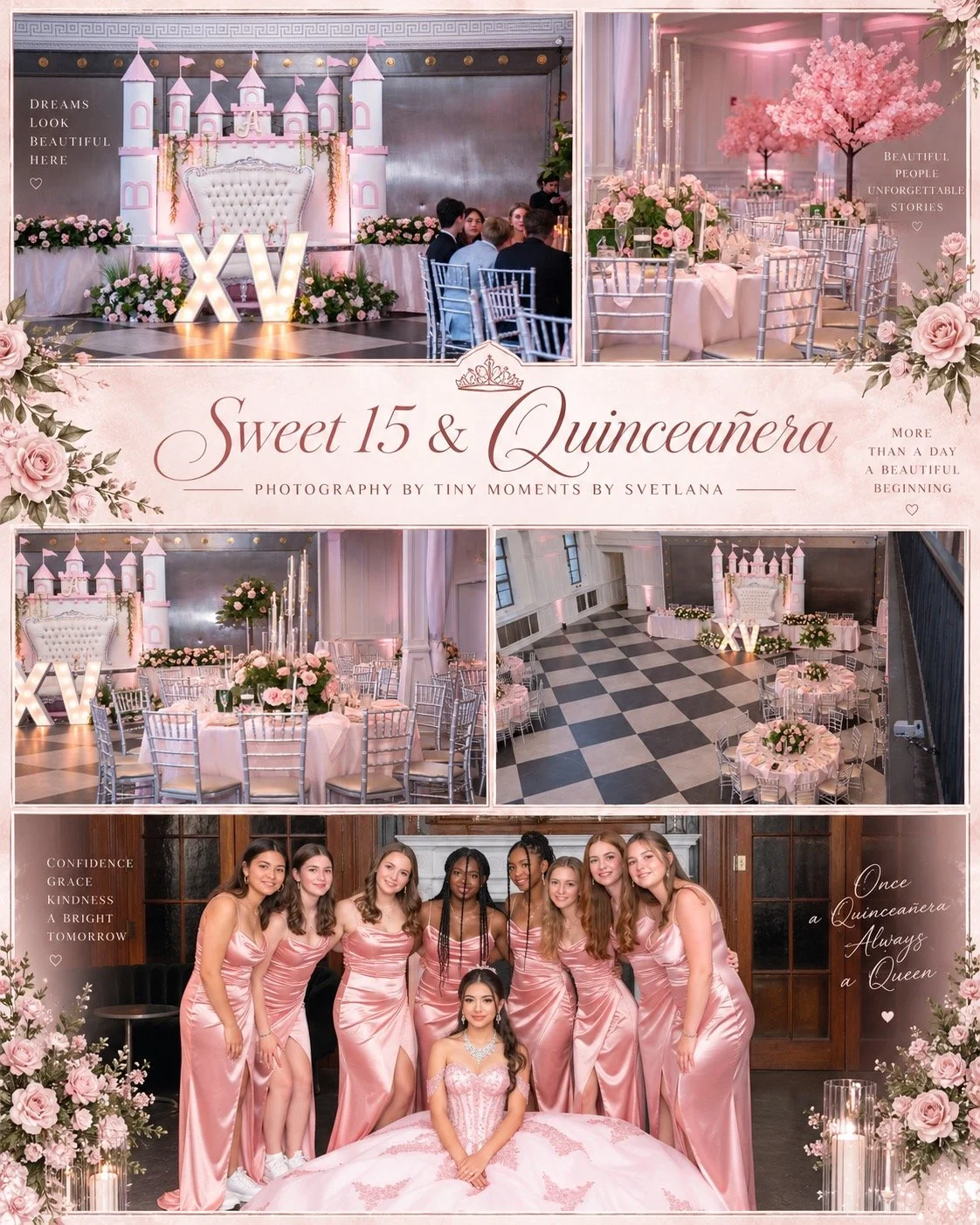
Family Photos With Teenagers in NJ: A Natural, No-Pressure Guide
Parents often take many photographs when their children are babies and toddlers. There are birthdays, first steps, missing teeth, school beginnings, and new milestones every few months.
Then children become teenagers, and professional family photographs sometimes stop.
Schedules become complicated. Teenagers have opinions about clothing, hair, locations, and how they want to appear. Some are comfortable in front of a camera; others would rather be almost anywhere else. Parents may worry that the session will feel forced or that no one will give a natural expression.
But the teenage years are part of your family’s story too. They deserve to be preserved without asking your older children to pretend they are still little.
If you are planning family photos with teenagers in NJ, the best approach is not more pressure. It is better communication, thoughtful choices, and a photography plan that respects who your children are now.
Plan the Session With Your Teenager, Not Only for Them
Teenagers are more likely to feel comfortable when they know what is happening and have a reasonable voice in the plan.
You do not need to give them control over every detail. Simply explain why the photographs matter, when the session will happen, approximately what they will wear, and what you hope to create.
Ask for input on one or two choices:
Do they prefer a studio or outdoor setting?
Which of two clothing options feels more like them?
Is there a hairstyle they feel most comfortable wearing?
Would they like an individual portrait if the selected session allows time?
Small choices can change the experience from “something my parents are making me do” to “something I understand and helped plan.”
Explain Why the Photographs Matter Without Creating Guilt
You can tell your teenager that you want one current photograph of everyone together. You can explain that families change, children grow, and these images will mean more with time.
Try not to make the conversation about disappointment, obligation, or how much the session costs. That can create resistance before the camera ever appears.
Keep the message simple: this family matters to me, you are an important part of it, and I want to preserve who we are right now.
Teenagers do not have to feel sentimental in the moment for the photographs to become meaningful later.
Choose a Time That Respects Their Real Schedule
September can become busy very quickly. School, sports, clubs, tutoring, social plans, and homework all compete for the same afternoons and weekends.
Before selecting a session time, look at the entire family calendar. Avoid placing portraits immediately after a demanding game, performance, exam, or activity when possible. Give everyone enough time to eat, change, and arrive without rushing.
For outdoor sessions, available light affects timing. For studio sessions, there may be more flexibility, but your family’s energy still matters.
If one child functions better earlier and another needs time after school, tell me. We may not find a perfectly convenient moment for every person, but knowing the pressure points helps us choose a more realistic plan.
What Should Teenagers Wear for Family Photos?
Begin with coordination, not identical outfits.
Choose a small color palette, then let each family member wear something that fits their own style within it. One person might wear a neutral sweater, another a simple dress, and another a solid shirt with a jacket or textured layer.
Clothing should fit well when standing and sitting. Ask your teenager to try the complete outfit before session day, including shoes and layers, so there is time to make a reasonable adjustment.
Large logos, neon colors, and very busy graphics can pull attention away from faces. That does not mean every teenager must wear beige. Rich blue, burgundy, forest green, soft gray, cream, brown, muted rust, and other coordinated colors can photograph beautifully.
The goal is a family that looks connected without making every person look the same. Avoid introducing a dramatic haircut, unfamiliar shoes, or a completely different personal style only for the photographs. A polished version of your teenager is more timeless than a costume that does not feel like them.
For additional seasonal colors and outdoor preparation, you can also read my fall family photography guide.
Studio or Outdoor Family Photos With Older Children?
Both can work well.
A studio session offers controlled lighting, privacy, and protection from weather. It can be a good fit for a clean, polished family portrait or a schedule that cannot easily move because of rain.
An outdoor session offers space, movement, and seasonal scenery. Walking together or changing positions can help older children feel less observed than standing in one place for every image.
Choose based on your family rather than selecting a setting only because it is popular. Consider comfort, walking distance, privacy, weather, clothing, accessibility, and current property rules.
My family photography options include studio and outdoor choices for appropriate sessions. I help families think through the setting after I understand the people, season, and style involved.
Natural Does Not Mean Completely Unposed
Many teenagers dislike the idea of “posing” because they imagine stiff shoulders and a frozen smile.
Professional guidance should make a photograph feel easier, not more artificial. I may adjust how family members stand, where hands rest, which shoulder turns slightly, or how people fit together. Then I can use small prompts or movement to help expressions feel more natural.
We can create the traditional portrait where everyone looks toward the camera, plus sibling, parent-and-child, and more relaxed groupings when the session structure allows.
The goal is not to remove all direction. It is to use enough direction that no one wonders what to do while leaving room for personality.
Do Not Practice One “Perfect” Smile
Telling a teenager to smile repeatedly can make the expression smaller, more guarded, or less natural.
You do not need to practice one camera smile at home. You also do not need to correct every expression during the session.
Some teenagers have a big open smile. Others look most like themselves with a softer expression. A thoughtful portrait gallery can include both.
Let me guide the expressions and pacing. Parents can help most by staying calm, keeping comments positive, and avoiding appearance criticism in front of the camera.
Make Room for Sibling Relationships
Sibling photographs change as children get older.
The connection may be less about holding hands and more about standing comfortably together, sharing a private joke, or showing the familiar way they interact. I do not need siblings to pretend they never annoy one another. I need enough cooperation to create a genuine photograph of the relationship they have now.
If there is a large age difference, tell me. If siblings are very close, shy together, or likely to make one another laugh at exactly the wrong moment, that information can actually help me plan.
Family sessions can also include different groupings when the selected option and timing allow. Confirm the collection details before assuming every combination or individual portrait is included.
Consider an Individual Portrait Too
An individual portrait can be valuable even when the main purpose is a family photograph.
Teenagers change quickly. An individual image can preserve their appearance and personality during middle school, high school, or the years before graduation. It may also become useful for a keepsake, family display, school-related need, or simply for grandparents.
If you want individual portraits, mention that before booking. We can review whether the chosen session provides enough time and whether a different clothing layer would create useful variety.
Family Photography in West Windsor and Mercer County, NJ
My appointment-based studio is in West Windsor, and I work with families from Princeton, Plainsboro, Hamilton, Robbinsville, Lawrenceville, East Windsor, and surrounding Mercer County and Central New Jersey communities.
Family photographs with teenagers do not need elaborate props or forced playfulness. They need clear expectations, thoughtful clothing, respectful guidance, and enough time to create both a polished portrait and genuine connection.
Whether you prefer a studio look or an appropriate outdoor setting, I will help with planning, styling, and posing so your family does not have to arrive knowing what to do.
Frequently Asked Questions About Family Photos With Teenagers
What if my teenager does not want family photos?
Explain why one current family portrait matters, give them limited input on clothing or setting, and keep the request clear. Avoid using guilt or expecting them to show excitement they do not feel.
Should teenagers choose their own outfits?
Give them options within the family palette rather than unlimited choices or no choice at all. The final outfit should coordinate, fit comfortably, and still feel recognizable to them.
Can a teenager wear glasses in family photographs?
Yes. If glasses are part of their everyday appearance, they should usually wear them. Clean the lenses and frames before the session and bring the pair they normally use.
Is a studio or outdoor session better for older children?
Either can work. Studio portraits offer controlled lighting and privacy; outdoor sessions provide movement and seasonal scenery. Choose according to your family’s comfort, schedule, and preferred style.
Will you help teenagers pose naturally?
Yes. I guide posture, hands, angles, spacing, and expression. Teenagers do not need modeling experience or practiced poses.
Can we take individual and sibling portraits too?
Possibly, depending on the selected collection, family size, and session time. Tell me which groupings matter before booking so you can choose an appropriate option.
Your Family Story Does Not Stop When Childhood Changes
Teenagers may not give you the same easy giggles they gave you at four years old. They may have stronger opinions, busier calendars, and a very clear idea of how they want to look.
That is not a reason to stop taking family photographs. It is a reason to photograph this stage honestly.
Years from now, you will not only remember whether everyone smiled perfectly. You will see how tall your children had become, the expressions they made, the relationship between siblings, and the way your family fit together during a chapter that moved faster than it seemed.
If you are considering family photos with teenagers or older children in West Windsor or Mercer County, explore my current family photography options and contact me with your family size, children’s ages, preferred season, and whether you are thinking about a studio or outdoor session.
I will help you plan an experience that feels comfortable, respectful, and true to your family.
— Svetlana
Tiny Moments by Svetlana / Svetlana Boyko Photography
Maternity Photos With Your Partner and Children: A Calm NJ Planning Guide
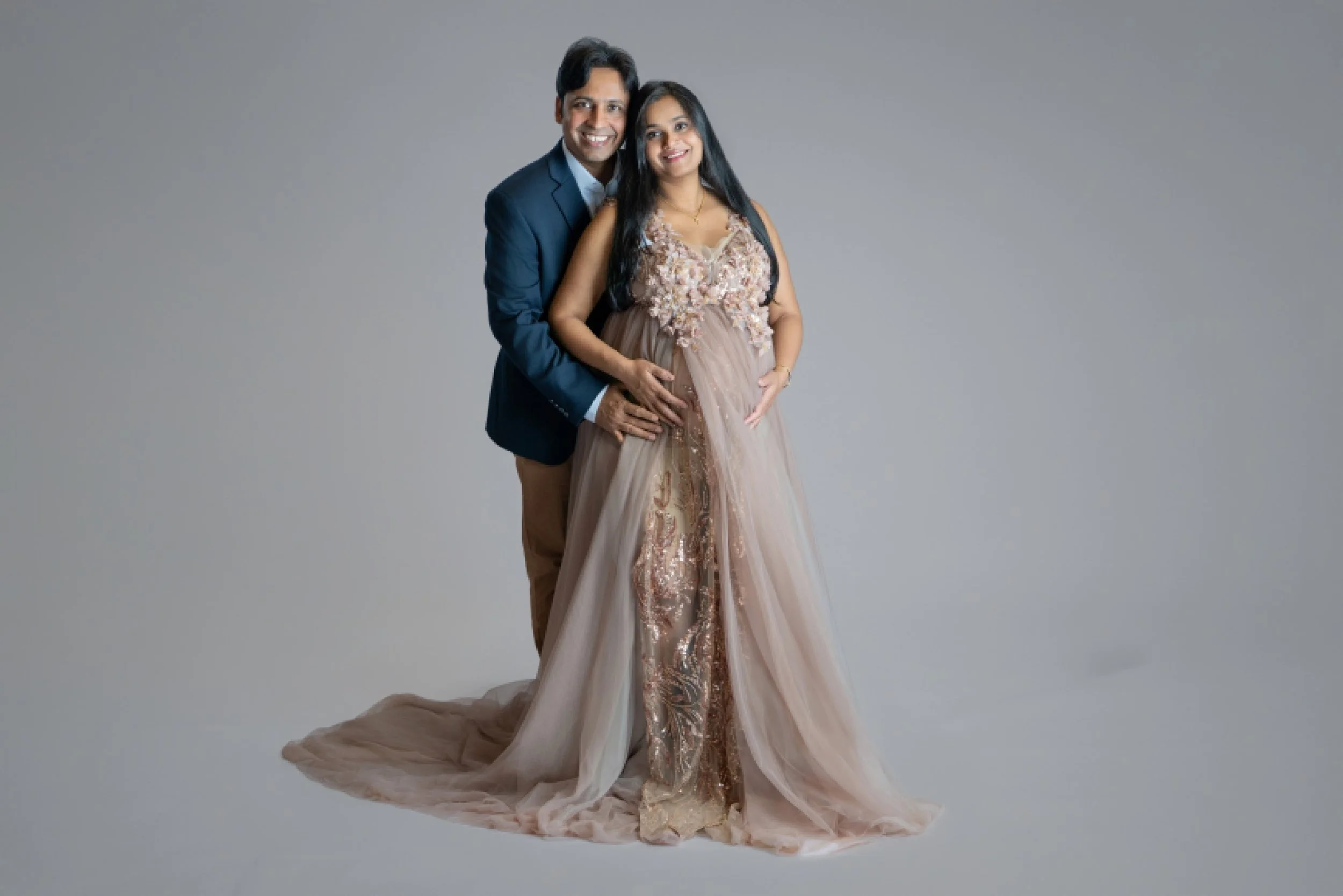
Maternity photographs can be a beautiful celebration of the mother who is carrying a baby. They can also preserve the quiet moment when an entire family is waiting for someone new.
If you are thinking about including your partner or older children, you may be wondering whether the session will feel crowded, how everyone should dress, or what happens if a young child does not want to cooperate. These are completely normal questions.
Family maternity photos need not become complicated. We can create portraits of you alone, images with your partner, and natural moments with your children while keeping the experience centered on this pregnancy.
Here is how I recommend preparing for maternity photos with family in NJ.
Begin With the Story You Want to Preserve
Before choosing clothing or a location, think about what you want the photographs to say.
Do you want this gallery to focus mostly on you, with a few family images? Do you want to show the connection between you and your partner? Is an older child becoming a big brother or sister an important part of the story?
There is no correct balance. Some mothers want an artistic portrait experience focused largely on pregnancy. Others want the session to feel like a family chapter, with everyone participating. Many families want a combination.
Tell me what matters most before the session. That helps me plan the order, styling, and groupings instead of trying to make every possible photograph on the day.
Keep the Expecting Mother at the Center
When family members join, the maternity session should still celebrate you and the baby you are carrying.
I recommend planning time for portraits of you alone, even if you usually prefer being photographed with other people. These individual images give us room to focus on your shape, expression, hands, movement, gown, or fabric styling without asking a child or partner to remain in place.
Family photographs add connection. Individual maternity portraits preserve your personal experience of this season. Having both creates a fuller story.
You do not need to know how to pose for either part. I guide hands, posture, angles, and small movements so the photographs feel polished without asking you to become someone different in front of the camera.
Including Your Partner in Maternity Photos
Partner photographs can be quiet and simple. A hand on your belly, a close embrace, or a shared look can show anticipation without feeling overly posed.
If your partner feels uncomfortable in front of the camera, that is fine. Most people are not professional models. I give clear direction rather than expecting either of you to arrive with poses prepared.
Discuss expectations ahead of time. Let your partner know how much of the session will include them and what clothing they should bring.
Simple preparation makes the experience easier for both of you.
Including an Older Child or New Big Sibling
Maternity photographs can preserve the stage just before an older child becomes a big brother or sister.
Once your baby arrives, newborn photography can continue that story by documenting your family together in this completely new chapter.
The goal is not to make a child perform excitement on command. They may be affectionate, shy, energetic, or unsure. I work with their real personality instead of pressuring them into a fixed smile.
Prepare children with a short, positive explanation: you are going to take photographs together and have a little time with Mom and the baby. Avoid promising that they must behave perfectly or smile for every picture.
Depending on age and comfort, a child might stand beside you, hold your hand, gently connect with your belly, or cuddle with the family. Not every idea fits every child, and that is okay.
Plan the Session Around Young Children Thoughtfully
If a toddler or young child is participating, tell me about their normal nap, meal, and bedtime rhythm. We cannot control every mood, but we can avoid choosing an obviously difficult part of their day when possible.
Bring the familiar items your child normally needs when away from home. A small favorite toy or comfort item can help, although it does not need to appear in the final photographs.
We can also think about the order of the session. Some children do best when family photographs happen near the beginning, before their attention is tired. Others need a few minutes to observe the space and warm up. I adjust based on the child who arrives rather than treating one order as a rule.
If your child needs a pause, movement, or a cuddle, that is part of working with families—not a sign that the session is failing.
What to Wear for Family Maternity Photos
Start with the mother’s outfit, then coordinate everyone else around it.
If you are wearing a soft cream or neutral gown, your partner and children might wear quiet shades such as beige, tan, soft gray, dusty blue, muted green, or another color that works with the overall palette. If your maternity look is darker or more dramatic, the family clothing can support that feeling without matching exactly.
Try to avoid large logos, neon colors, and several competing patterns. Texture can add interest, but the eye should still go first to faces, connection, and your maternity shape.
Comfort matters too. Children should be able to sit, stand, and move without constant clothing adjustments. Partners should wear something that feels like an elevated version of themselves rather than an unfamiliar costume.
Before buying anything new, share photographs of the clothing you already own. We may be able to build a coordinated look without dressing everyone from scratch. Consider the background too: a light studio look may call for a different palette than an outdoor fall setting.
Studio or Outdoor Family Maternity Photos?
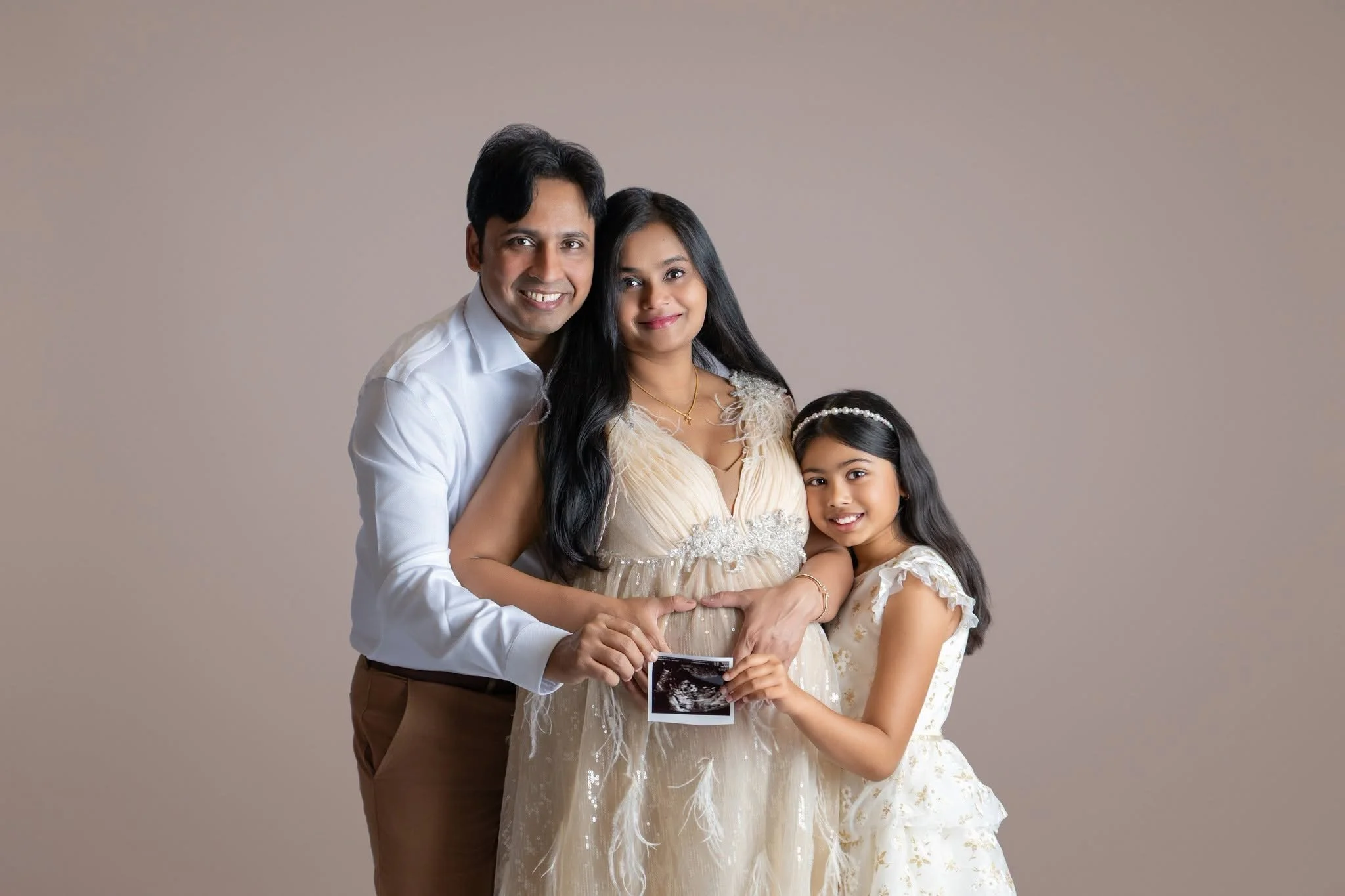
Both can be beautiful, but they create different experiences.
A studio maternity session offers controlled lighting, privacy, and protection from wind, rain, cold, and changing daylight. It also makes wardrobe changes easier and gives us a consistent environment for individual, partner, and family portraits.
An outdoor session offers natural movement and seasonal scenery. It can feel romantic and relaxed, especially when the location has meaning for your family. Outdoor sessions also require more flexibility around weather, walking, changing light, privacy, parking, and property rules.
Do not select an outdoor location only because it looks beautiful in someone else’s photograph. We need to consider current photography rules, accessibility, how far you are comfortable walking, where children can safely wait, and whether the setting fits the intended use of the images.
My West Windsor studio gives families a reliable indoor option, while outdoor locations can be considered when they are appropriate for the season, your comfort, and the session plan.
When Should You Schedule Family Maternity Photos?
My current guidance is to photograph maternity sessions around 28–34 weeks of pregnancy. This often allows the belly to photograph clearly while leaving room for posing and movement, but every pregnancy is different.
Your comfort and healthcare guidance come first. If you are carrying multiples, have medical concerns, or need to limit walking or standing, discuss timing with your healthcare provider and tell me what accommodations may be helpful.
Reserve before you reach the ideal photography window, especially if you want a particular season, weekend, or outdoor setting. Planning early gives us time to coordinate family clothing and decide who will participate without creating a last-minute rush.
What If My Child Does Not Cooperate?
Children do not always smile when adults ask, and that does not mean we cannot create meaningful photographs.
I use guidance, movement, connection, and simple prompts rather than expecting a young child to stay perfectly still. Sometimes the most natural image happens while a child is leaning into Mom, holding a parent’s hand, or laughing between more traditional portraits.
We may not make every pose imagined in advance. My priority is to create a varied gallery while keeping the experience respectful and realistic for the child’s age.
Parents can help by staying calm. When a child feels that everyone is anxious about their expression, the pressure usually grows. Let me guide the process while you focus on connecting with your family.
Maternity Photography for West Windsor and Mercer County Families
My appointment-based studio is in West Windsor and serves families from Princeton, Plainsboro, Hamilton, Robbinsville, Lawrenceville, East Windsor, and communities throughout Mercer County and Central New Jersey. If you are also planning updated family portraits before or after baby arrives, you can view my family photography sessions in Princeton and Mercer County.
Whether you choose an elegant studio look or an appropriate outdoor setting, I help plan the clothing, posing, and family groupings so you do not have to arrive knowing what to do.
The photographs can show who was waiting and what your family looked like just before everything changed.
Frequently Asked Questions About Family Maternity Photos
Can my partner and children join my maternity session?
They can participate with session options that include family members. Review the current collection details before booking because inclusions vary.
Should I take maternity photographs alone too?
I recommend allowing time for individual portraits even when your family joins. The combination of solo, partner, and family images creates a more complete story.
What should my partner wear?
Choose clothing that coordinates with the mother’s outfit without matching it exactly. Solid or quiet colors, a good fit, and limited logos or patterns usually keep the attention on your family.
What if my older child is shy or very active?
That is normal. Tell me about your child before the session, avoid scheduling during a difficult routine time when possible, and let me use age-appropriate guidance rather than forcing one expression.
Is a studio or outdoor session better with children?
It depends on the season, your child’s personality, your comfort, and the look you want. A studio is controlled and weather-independent; an outdoor setting offers space and scenery but requires more planning.
When should I book maternity photographs?
My general photography window is 28–34 weeks, adjusted for the individual pregnancy. Book before that window so there is time to plan clothing, participants, and location.
Let This Chapter Belong to the Whole Family
Pregnancy is deeply personal, but it also changes the family waiting around you.
Your partner and older children are preparing for new roles while you experience your own transformation. Family maternity photographs can be elegant, playful, quiet, or emotional. They do not require perfect children or professional models—only a thoughtful plan and room for connection.
If you are planning maternity photographs in West Windsor or Mercer County, explore my current maternity photography options and contact me with your due date, how many people you hope to include, and whether you prefer a studio or outdoor look.
I will help you plan the rest.
— Svetlana
Tiny Moments by Svetlana / Svetlana Boyko Photography
Professional Headshot Checklist: What to Wear, Bring, and Update Before Fall Recruiting
Fall often feels like a fresh professional season. Students return to campus, career fairs begin, and many people realize that the photograph on their LinkedIn profile or business website no longer looks like them.
If you are preparing for a new role, internship search, career change, or updated company profile, a professional headshot gives you one polished image to use consistently. It should still look like you—prepared and confident.
My West Windsor studio is close to Princeton. I guide clients through posing and expression, so you do not need to arrive knowing what to do in front of the camera.
This checklist explains what to wear, bring, and decide before your session.
First, Decide Where You Will Use Your Headshot
Before choosing an outfit, think about where the finished photograph needs to work. A headshot for LinkedIn may also appear on a company website, speaker biography, email signature, or professional directory. Identify your main purpose and the impression you want the image to create.
Ask yourself:
Is my field traditional, creative, technical, academic, medical, or client-facing?
Do I usually meet people in business-professional or business-casual clothing?
Do I want the image to feel warm and approachable, polished and formal, or somewhere in between?
Will the photograph be a small LinkedIn image or a larger website portrait?
Share those answers before we begin. They help me guide your expression, framing, and outfit choice.
What to Wear for a Professional Headshot
Start with an elevated version of what you normally wear professionally.
In a formal field, that may mean a suit, blazer, structured dress, or collared shirt. In a relaxed industry, a simple blouse, knit top, open-collar shirt, or clean jacket may feel more natural. Look prepared without dressing as a different person.
Solid colors usually keep the focus on your face. Navy, charcoal, cream, soft blue, muted green, burgundy, and other quiet colors can photograph well. Choose what suits your coloring, style, and layers.
Try to avoid:
large logos or visible brand names;
very busy patterns;
tiny high-contrast stripes or checks;
clothing that pulls, gaps, bunches, or needs constant adjustment; and
a neckline or jacket you do not feel comfortable wearing.
Fit matters more than the label. A simple, well-fitting top often photographs more professionally than an expensive piece that makes you feel stiff or distracted.
Bring One or Two Useful Alternatives
You do not need to carry an entire closet into a headshot session. A few intentional options are much more helpful.
Consider bringing:
your primary shirt, blouse, dress, or jacket;
one alternate top in a different color or neckline;
a blazer or cardigan that can be added or removed;
a second tie, if you wear one;
simple jewelry options; and
the glasses you normally wear for work.
Place clothing on hangers for the drive when possible. Before leaving home, check the shoulders and neckline for lint, makeup, pet hair, and loose threads. A small lint roller is useful, especially with dark clothing.
More choices are not always better. Bring the options that match your actual professional life, and I can help you decide which combination reads most clearly on camera.
Coordinate Layers Without Creating Distractions
Layers give us easy variety. A blazer over a simple top may feel formal; removing it can make the next image more relaxed. Use enough contrast that the layers do not disappear into one another. Keep jewelry simple, and leave out anything that twists, reflects strongly, or needs constant straightening.
Keep Hair and Makeup Recognizable
A professional headshot should not surprise the people who meet you after seeing it online.
Wear your hair in a way that feels familiar and professional to you. If you are planning a haircut or color appointment, avoid making a major last-minute change unless that is genuinely the new look you want documented. Give yourself enough time to see how the style feels and how you prefer to wear it.
For makeup, polished and recognizable is usually the safest direction. You can define the eyes, even the skin tone, and add enough color that your features do not feel washed out, but you do not need to transform your face. If you rarely wear makeup, you do not have to arrive in a dramatic style simply because a camera is involved.
Bring the small items you normally use for touch-ups—a comb or brush, lip color, powder, or tissues—rather than buying unfamiliar products just for the session.
If You Wear Glasses, Bring Them
If people normally see you in glasses, they are part of your professional appearance. Bring the pair you wear most often.
Clean the lenses carefully before your session and check the frames for smudges. If you own more than one pair and regularly alternate between them, you may bring both. I will work with your position and the studio lighting to create a clear, natural portrait.
Do not feel that you must remove your glasses just because reflections can sometimes happen. The more important question is whether the finished headshot should look like the person coworkers, clients, or recruiters will meet.
Practice the Feeling, Not a Fixed Smile
Many adults tell me they do not know how to pose or that they dislike being photographed. That is completely normal. Headshot sessions are not supposed to depend on your modeling experience.
You do not need to practice one frozen smile in the mirror. Instead, think about the qualities you want the portrait to communicate: capable, calm, warm, direct, creative, trustworthy, or approachable.
During the session, I guide your shoulders, chin, posture, and expression. Small adjustments can make a large difference. We can create a little variety—from a fuller smile to a more composed expression—without making the photographs feel like different versions of you.
The best headshot is not always the image with the biggest smile. It is the one where your expression fits your work and still feels natural.
Check the Small Details Before You Leave Home
Headshots bring attention to the face and upper body. Check collars, lapels, buttons, glasses, necklaces, loose threads, pet hair, and makeup marks. Make sure the outfit stays comfortable when you sit and stand. Give yourself a little extra travel time so you can settle and talk through the image before we begin.
Think About Cropping and Consistency
LinkedIn, company directories, and websites may display the same photograph in different shapes. Tell me which platform matters most so we can plan the framing. If you represent a business, the level of formality should also feel compatible with the way the company presents itself. Keep the original high-resolution file after delivery instead of repeatedly saving a small social-media copy.
When Should You Update a Professional Headshot?
There is no single calendar rule. Update your image when it no longer represents how you look or work—for example, after a meaningful change in hairstyle, glasses, role, industry, or personal brand, or when you launch a website or begin speaking publicly.
If you have a firm deadline—such as an application, website launch, conference, or career event—ask about scheduling and current delivery timing before relying on a specific date. Planning early leaves room to select your finished image and update each platform carefully.
A Simple Headshot Bag Checklist
For most people, the final packing list is short:
primary professional outfit;
one alternate top or layer;
everyday glasses, cleaned;
simple accessory options;
comb or brush;
familiar touch-up products;
lint roller; and
notes or screenshots showing where the headshot will be used.
You do not need complicated props or an unfamiliar wardrobe. You need clothing that fits, a clear purpose for the image, and a photographer who will guide you.
Professional Headshots Near Princeton and West Windsor, NJ
Early September is an especially practical time to review your professional image in the Princeton area. Local recruiting events, networking conversations, interviews, and fall business planning are beginning, but a headshot is useful well beyond one career fair.
Students and recent graduates may need an image for LinkedIn or a professional profile. Established professionals may be updating a company website, preparing for a new role, or replacing an outdated photograph. Business owners may need a portrait that feels consistent across their website, social profiles, press materials, and directories.
My appointment-based studio is in West Windsor, close to Princeton and convenient for clients throughout Mercer County. Current headshot sessions are relaxed and guided, with direction for posing and expression so you do not have to figure it out alone.
Frequently Asked Questions About Professional Headshots
How long does a headshot session take?
My current headshot listing describes sessions as approximately 20–40 minutes. Confirm the current session details when you book, especially if you have a deadline or a specific use in mind.
What colors look best in a professional headshot?
Solid, quiet colors are often a reliable starting point because they keep attention on your face. Choose a color that suits you and fits your professional setting rather than following one universal rule.
Should I bring more than one outfit?
One primary outfit plus an alternate top or removable layer is usually enough. The goal is useful variety, not a complete wardrobe change every few minutes.
Can I wear glasses in my headshot?
Yes. If glasses are part of your everyday professional appearance, bring the pair you normally wear. Clean the lenses and frames before arriving.
Will you help me pose?
Yes. My current headshot experience includes guidance with posing and expression. You do not need to know how to position your shoulders, hands, or chin before you arrive.
How far ahead should I schedule before a career event or website launch?
Schedule as early as you reasonably can, then confirm current availability and delivery timing before planning around a fixed deadline. This gives you time to choose an image and update the places where it will appear.
Ready for a Headshot That Still Feels Like You?
A professional portrait should look polished without feeling stiff or unfamiliar. You should recognize yourself in it—and feel comfortable using it when you introduce yourself online or step into a new professional opportunity.
If you need an updated headshot near Princeton, West Windsor, or elsewhere in Mercer County, explore my current professional headshot information and contact me with the way you plan to use the image and any deadline you are working toward.
I will guide you through the rest.
— Svetlana
contact me
Tiny Moments by Svetlana / Svetlana Boyko Photography
Newborn Photo Session Checklist: What NJ Parents Need to Bring, Wear, and Expect
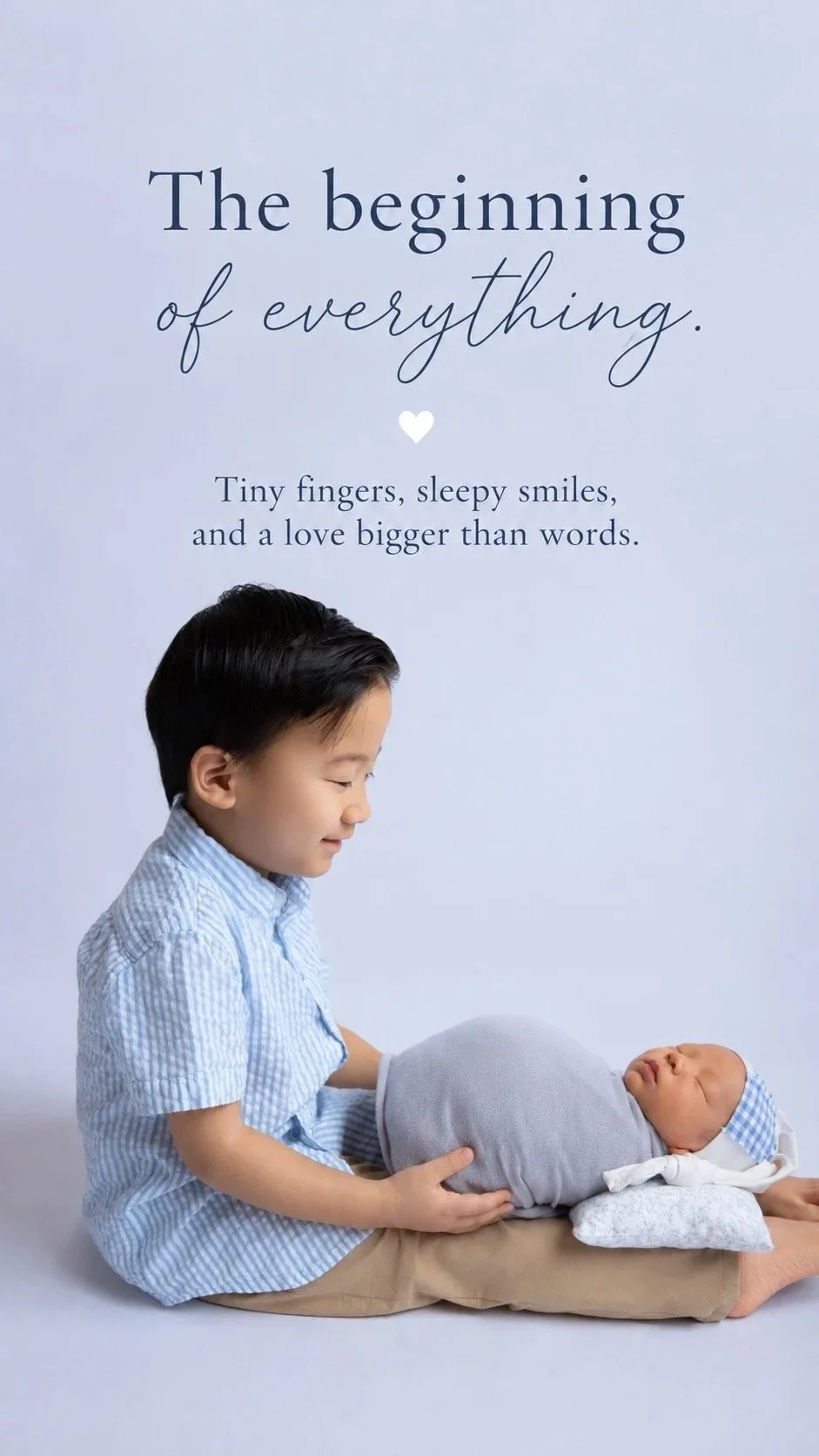
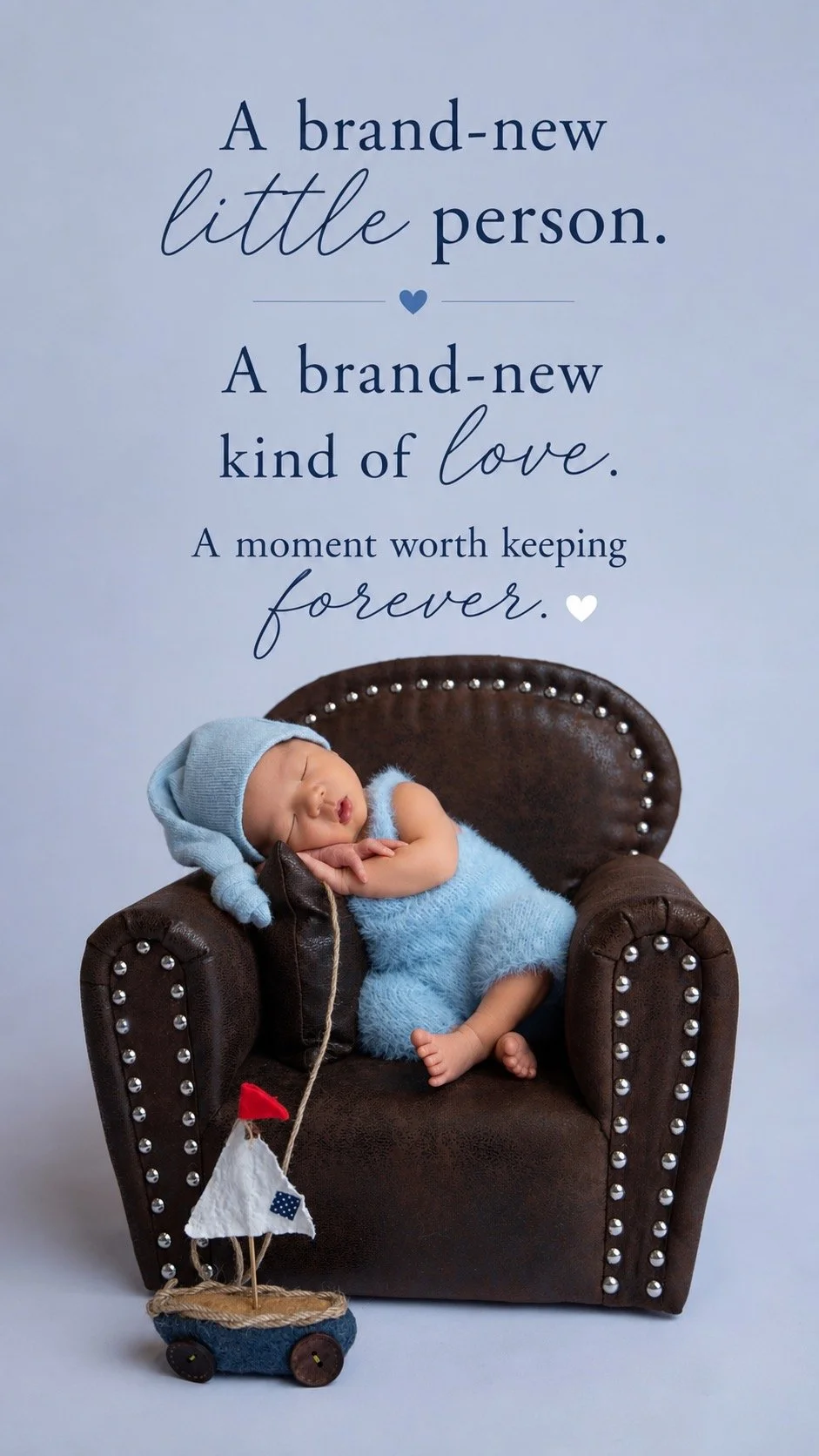
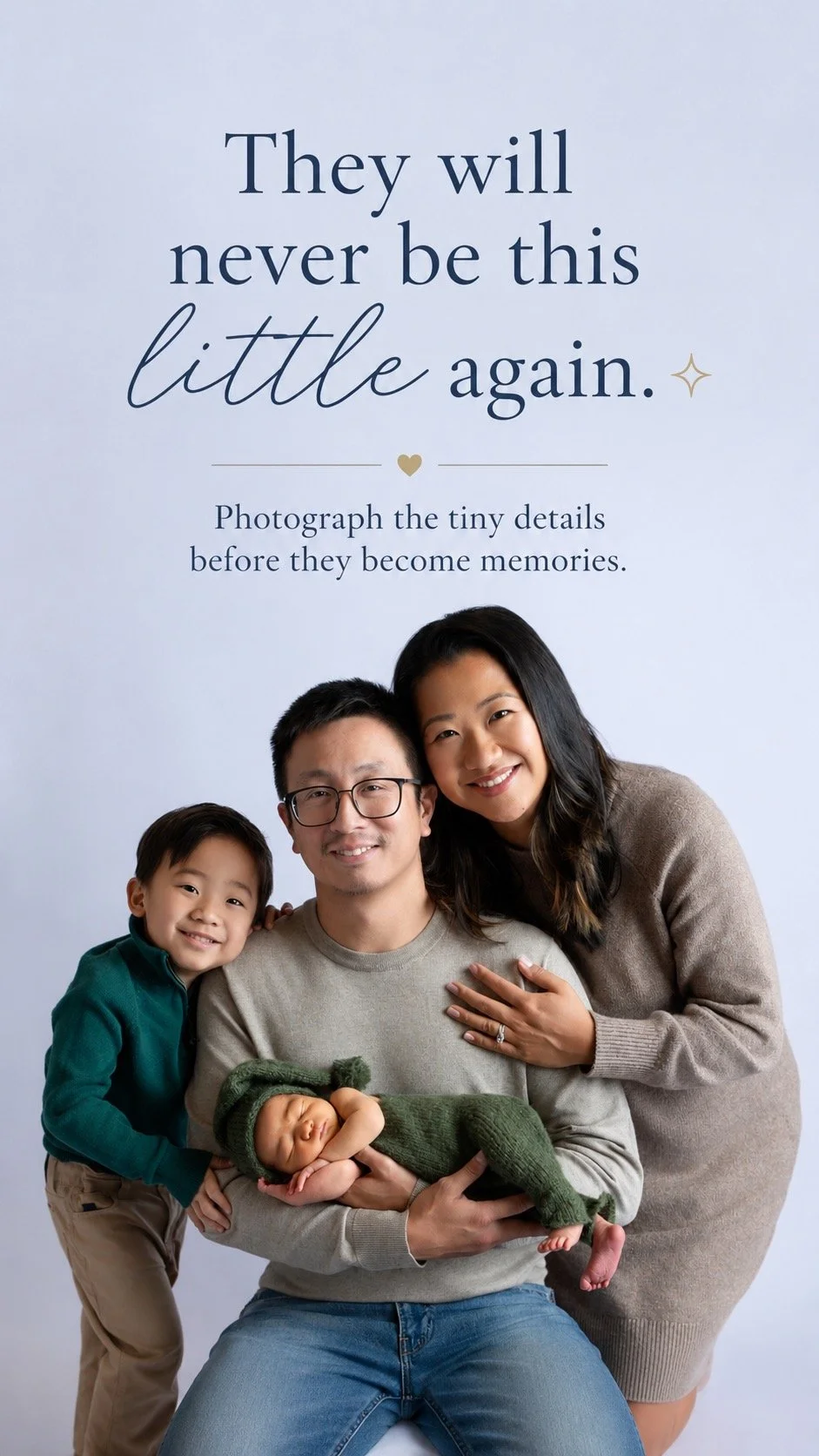
The first weeks with a newborn can feel like living in a completely different sense of time.
Your days are measured in feedings, diaper changes, cuddles, naps, and trying to remember whether you already drank the cup of coffee sitting beside you. Then suddenly, somewhere in the middle of all of that, it is time for your newborn photography session.
One of the most common worries parents have is simple: What am I supposed to bring?
The good news is that you do not need to arrive with half of your nursery packed into the car.
My goal at my West Windsor newborn studio is to make the experience as calm and easy as possible. I provide the photography pieces we need—such as newborn wraps, outfits, accessories, and props—so you can concentrate on your baby and your family.
This newborn photo session checklist will help you understand what is useful to bring, what you can leave at home, what parents should wear, and what you can expect once you arrive.
Start With Your Normal Diaper Bag
You do not need a special photography bag.
Start with what you would normally pack when leaving the house with your baby.
Bring the feeding and diapering supplies your baby normally needs for several hours away from home. Every baby has a different routine, so your own diaper bag is usually the best guide.
Think about the practical things that help your baby stay comfortable: diapers, wipes, feeding supplies, and anything your baby regularly uses for soothing.
If your baby uses a pacifier, you may also want to have it available.
The important thing is not to create a complicated checklist of unfamiliar items. Your newborn session should fit around your baby rather than forcing your baby into a photography schedule.
You Do Not Need to Buy Newborn Photography Outfits
This is one of the easiest things to take off your list.
My newborn studio already has wraps, newborn outfits, blankets, headbands, bonnets, hats, baskets, beds, bowls, buckets, and other photography props available for sessions.
You do not need to shop for a tiny photography outfit unless there is something personal that you specifically want photographed.
Before the session, we can think about the overall look you love. Some parents are drawn to soft creams and neutrals. Others love blush, blue, florals, earthy tones, or a little more color.
The goal is not to bring every possibility with you.
The goal is to create a cohesive session where your baby remains the focus.
What Should Your Baby Wear to the Studio?
Keep the trip to the studio simple.
You do not need to dress your baby in an elaborate outfit before leaving home because most newborn portraits will use wraps or studio clothing once we begin.
Choose something comfortable and easy to remove.
The less complicated the clothing, the easier it is to transition your baby into the session without unnecessary handling.
Remember that your baby does not care what the camera schedule says. If your baby needs time to settle after arriving, that is completely fine.
We work around the baby.
What Should Mom Wear for Newborn Family Pictures?
This is the part parents sometimes spend far too much time worrying about.
You do not need to dress like someone else for your newborn photographs.
For a soft, timeless look, simple neutral clothing generally photographs beautifully. Cream, white, beige, soft gray, and earthy neutral tones keep attention on faces, connection, and your baby.
Try to avoid very large logos or extremely busy patterns because they can pull attention away from the people in the photograph.
Most importantly, choose something you feel comfortable wearing.
You recently had a baby.
This is not the day to force yourself into something uncomfortable simply because you think it will photograph well.
My job is to guide you through posing and positioning. You do not need to arrive knowing how to stand, what to do with your hands, or how to hold your baby for the camera.
What Should Dad or a Partner Wear?
The easiest approach is coordination rather than exact matching.
If Mom is wearing cream, for example, a partner might wear beige, tan, soft gray, white, or another quiet coordinating color.
You do not need identical shirts.
In fact, photographs often feel more natural when everyone's clothing works together without looking like a uniform.
Keep the overall palette simple and let your baby's face and your family's connection remain the most important parts of the image.
What About Older Brothers and Sisters?
If siblings will be participating, prepare their outfits at the same time you prepare yours.
Again, coordinating is usually better than matching everyone exactly.
You can also prepare older children emotionally by keeping the explanation simple.
They do not need to be told repeatedly that they must smile, behave perfectly, or hold the baby a certain way.
I would rather let a sibling begin comfortably and guide them once they are in front of the camera.
A new baby is already a big adjustment for a child. Newborn photographs should not become another place where they feel pressure to perform.
One important booking detail: parent and sibling participation can depend on the newborn collection you choose, so check the current collection details before planning everyone's clothing.
Expect Feeding Breaks
Newborn sessions are intentionally not rushed.
My current newborn sessions use baby-led pacing because feeding, changing, soothing, cuddling, and breaks are normal parts of photographing a newborn.
If your baby becomes hungry, we stop.
If your baby needs a cuddle, we stop.
If a diaper needs to be changed, we stop.
The pauses are not interruptions to the session.
They are part of the session.
Parents sometimes worry that a feeding break means we are “losing time.” I do not look at it that way. A comfortable baby gives us a much better experience than trying to push through a moment when your baby clearly needs something.
What If My Baby Does Not Sleep?
You do not have to make your baby promise to sleep before coming through my studio door.
Some newborns settle quickly.
Others are alert.
Some want to eat again five minutes after we thought they were finished.
Some need more cuddling.
Babies are people, and even at only a few days old, they arrive with their own preferences.
I photograph the baby who arrives that day.
A calm newborn photography experience is not built around demanding one particular behavior. It is built around adjusting.
That is why newborn sessions allow more time than a traditional portrait appointment.
What If My Baby Cries?
Your baby is allowed to cry.
Crying does not mean the session is going badly.
It means your newborn is communicating.
We respond by slowing down and figuring out what your baby needs. That might mean feeding, changing, holding, soothing, or simply allowing more time.
Beautiful newborn photographs are never more important than your baby's comfort.
Parents are often much more worried about crying than I am.
Please do not feel embarrassed or apologize for your newborn behaving like a newborn.
Do I Need to Bring Props?
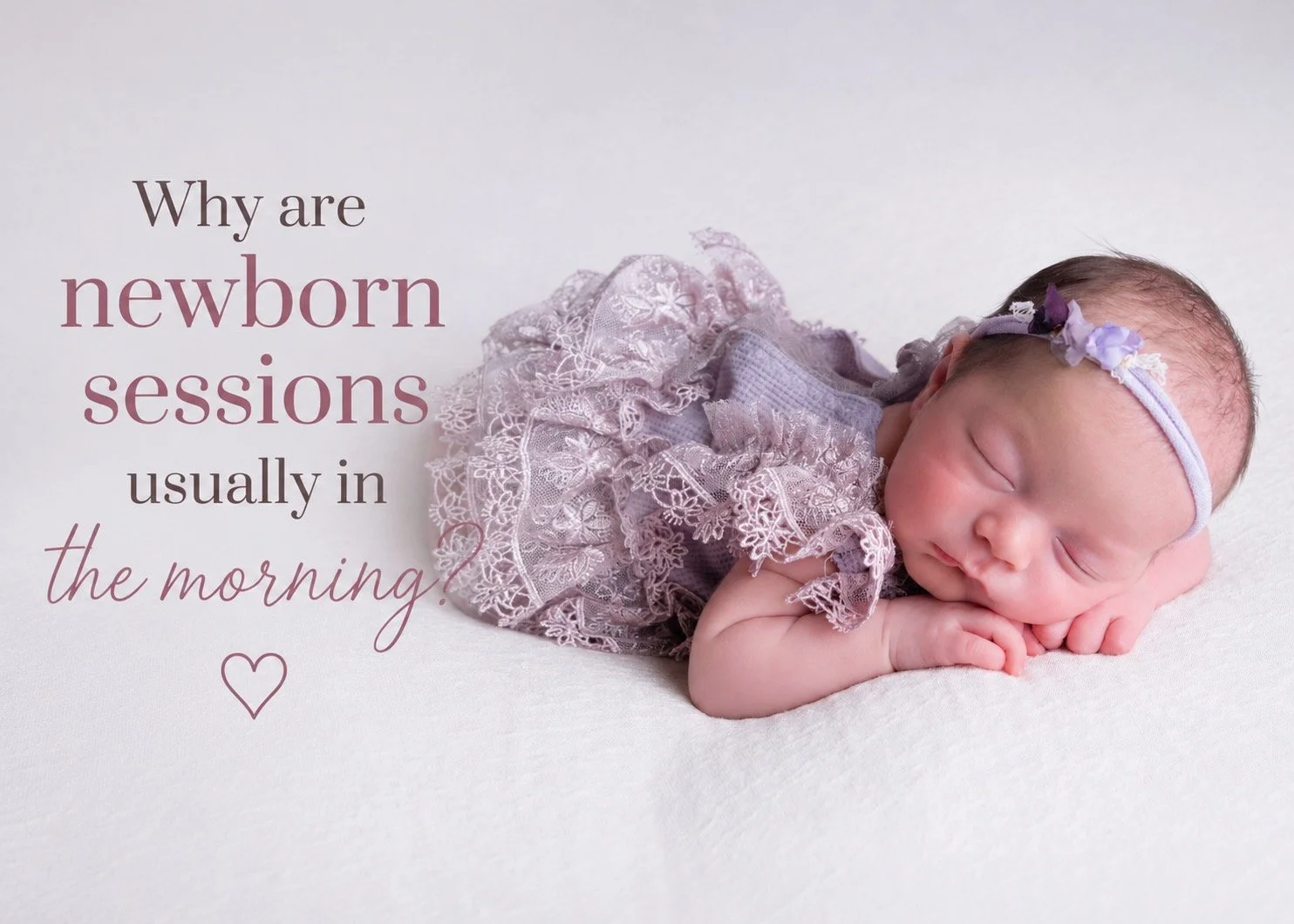
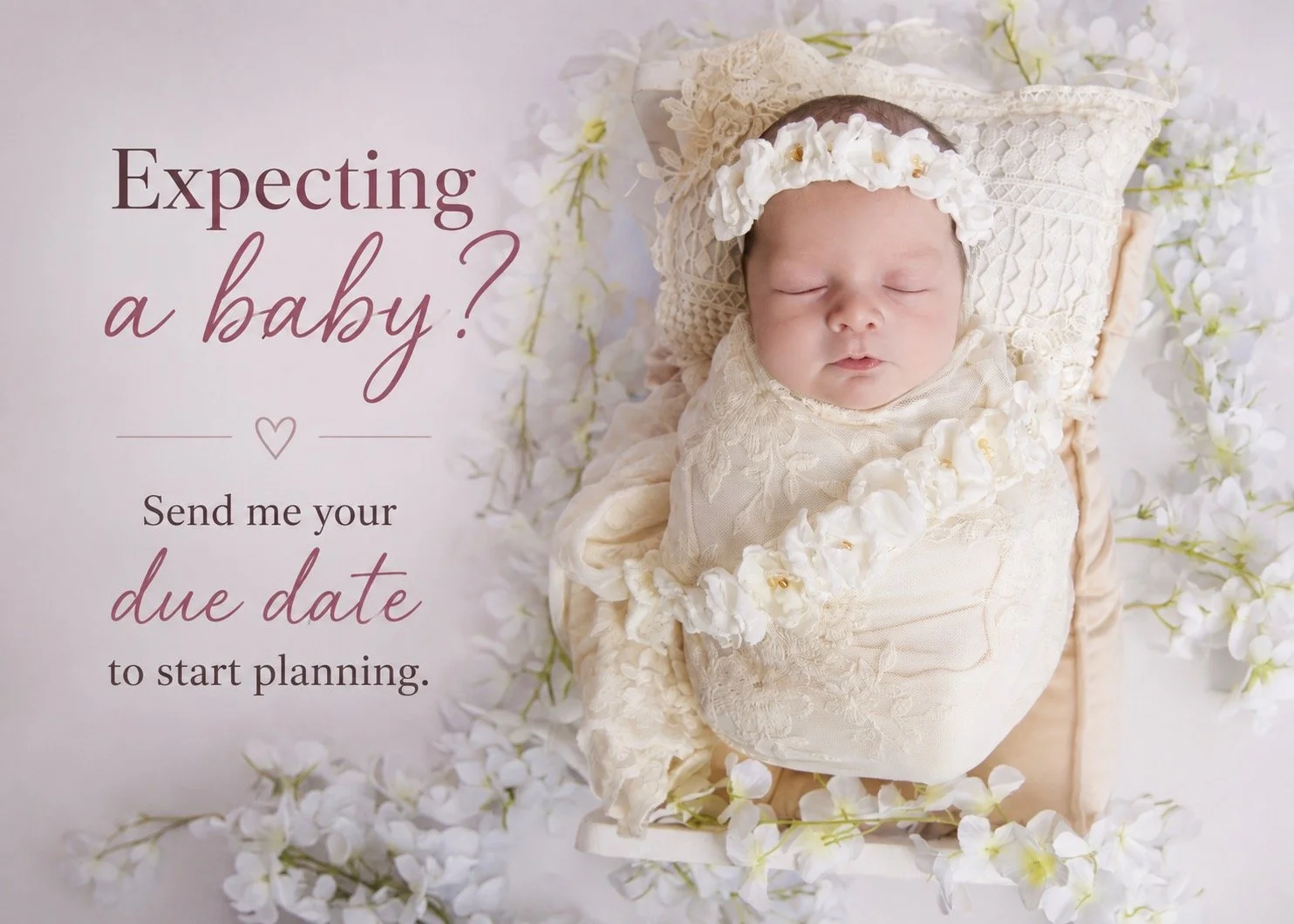
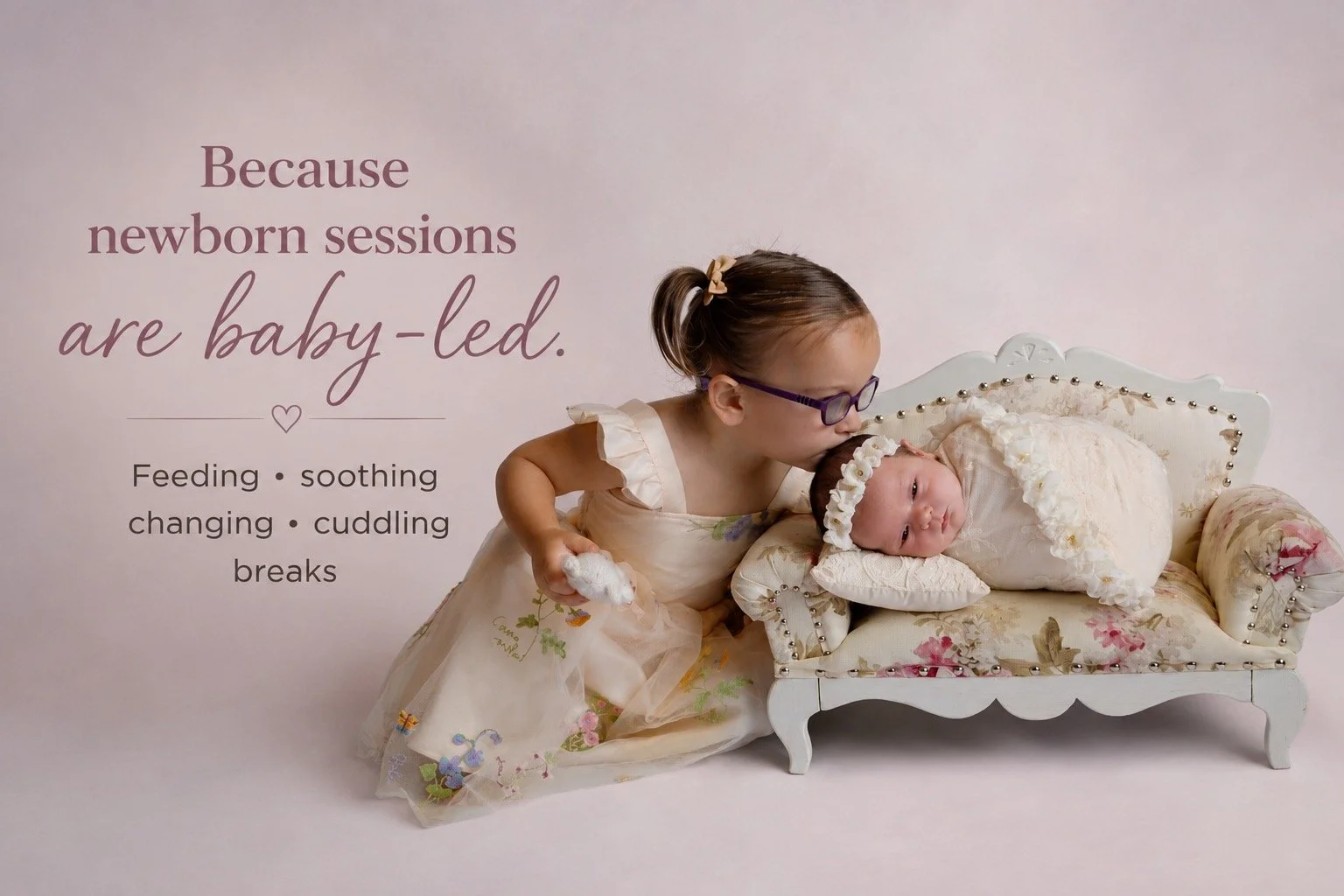
Generally, no.
My West Windsor studio is already equipped with photography props, wraps, outfits, and accessories.
That means you do not need to buy baskets, blankets, tiny beds, hats, or styled photography pieces before your appointment.
If you have something personally meaningful that you would like considered for your session, discuss it with me before arriving rather than bringing a large collection of objects on session day.
That gives me the opportunity to determine whether and how it may fit safely and visually into the session.
Simple usually photographs beautifully.
What Should Parents Expect During the Session?
A newborn session is not two or three straight hours of clicking the camera.
There is a rhythm to it.
We photograph.
We pause.
We soothe.
We change a setup.
Your baby eats.
We photograph again.
You hold your baby.
We continue when everyone is ready.
My current newborn photography information describes sessions as baby-led and typically lasting several hours, giving us room for those natural pauses.
Parents do not need to spend the entire session standing beside me worrying about whether the baby is cooperating.
Part of choosing a newborn photographer is being able to trust the process.
When Should You Book Newborn Photography?
The best time to begin planning is while you are still pregnant.
Your due date gives us a planning point even though babies obviously do not read calendars.
My current studio guidance recommends reserving during pregnancy, with newborn photographs generally planned for the early newborn stage.
If your baby decides to arrive on a different schedule than expected, the plan can be adjusted.
That flexibility is one of the reasons it helps to begin the conversation before delivery instead of waiting until you are home with a newborn and trying to organize everything at once.
A Simple Night-Before Newborn Photo Checklist
The night before your appointment, you do not need to create a complicated production.
Keep it simple:
Pack your normal diaper bag and feeding supplies.
Add a pacifier if your baby uses one.
Set out comfortable clothing for baby to travel in.
Prepare the clothing for any parents or siblings who will be photographed.
Double-check your appointment and travel time.
Leave the newborn photography props and styling pieces to the studio.
Then give yourself permission to stop preparing.
You already have enough to think about with a new baby.
Newborn Photography for Princeton and Mercer County Families
My newborn studio is located in West Windsor and welcomes families from Princeton and communities throughout Mercer County and Central New Jersey.
For new parents, convenience matters more than people sometimes realize.
You are already packing a baby into the car, thinking about feeding times, and adjusting to a completely new routine. Having a prepared studio means you do not have to create a photography setup at home or purchase a collection of props that you may never use again.
You arrive with your baby.
I guide you through the photography experience.
Together, we create the photographs.
Frequently Asked Questions About Preparing for Newborn Photos
Do I need to bring outfits for my newborn?
My studio provides newborn wraps, outfits, and photography accessories. If you have a specific sentimental item you hope to include, discuss it with me before your session.
What should parents wear for newborn photos?
Soft neutrals and simple clothing photograph beautifully. Choose clothing that coordinates without requiring everyone to match exactly, and prioritize something you feel comfortable wearing.
What happens if my baby needs to eat during the session?
We pause. Feeding breaks are a normal part of a baby-led newborn session.
What if my baby cries or will not sleep?
That is completely normal. The session slows down and adjusts around what your baby needs rather than rushing to stay on a rigid schedule.
Can siblings be included?
Sibling and family photographs are available with certain newborn collections. Check the current collection details before booking so you know which option fits the photographs you want.
When should I reserve my newborn session?
I recommend beginning the conversation during pregnancy. Your due date gives us a planning point, and the session date can be adjusted around your baby's actual arrival.
You Do Not Need to Make the Newborn Stage Perfect
This may be the most important item on the entire checklist.
You do not need a perfectly sleeping baby.
You do not need to know how to pose.
You do not need to arrive looking as though you slept eight hours.
You do not need to bring an entire car full of props.
You simply need to bring your baby and the everyday things your baby needs to stay comfortable.
The newborn stage is already full of enough pressure.
Your photography experience should give you a chance to slow down and preserve what this tiny chapter actually feels like—the curled fingers, sleepy expressions, little stretches, the way your baby fits against your chest, and the beginning of your family's newest story.
If you are expecting and looking for newborn photography in West Windsor, Princeton, or Mercer County, I would be happy to help you start planning.
You can explore my current newborn session information and then contact me with your due date and any questions you have.
I will help you take it from there.
— Svetlana
Tiny Moments by Svetlana / Svetlana Boyko Photography